7 Wedding Dress Preservation Ideas That Keep Your Gown Beautiful for Decades
Introduction
Preserving a wedding dress is not just about keeping it clean — it is about protecting decades’ worth of fabric, beading and lace from the slow, often invisible damage that happens when a dress is stored incorrectly. A dress that looks spotless after the wedding can still yellow, weaken or spot years later, and by the time you notice, the damage is often permanent.
If you are planning to keep your gown long-term, here is what actually works — the professional process, how to choose a service, what you can do yourself in the meantime, and the mistakes that quietly ruin dresses.
1. Why Preservation Matters (Invisible Stains)
Even a dress that looks spotless after the wedding often has invisible residue — champagne, sugar, sweat or dirt from the hem — that can oxidise over time and cause yellowing or brown spotting years later, even in storage. You cannot see these stains on the day, which is exactly why they are so dangerous.
Fabric fibres also naturally weaken and discolour when exposed to light, humidity and folding creases over long periods. A dress left in a plastic bag in a hot attic is fighting all three at once. Proper preservation addresses both of these risks from the outset: it removes the invisible residue before it can set, and it stores the dress in conditions that slow the fabric’s natural ageing. Understanding this is the first step — preservation is not vanity, it is chemistry.
2. Professional Preservation Process
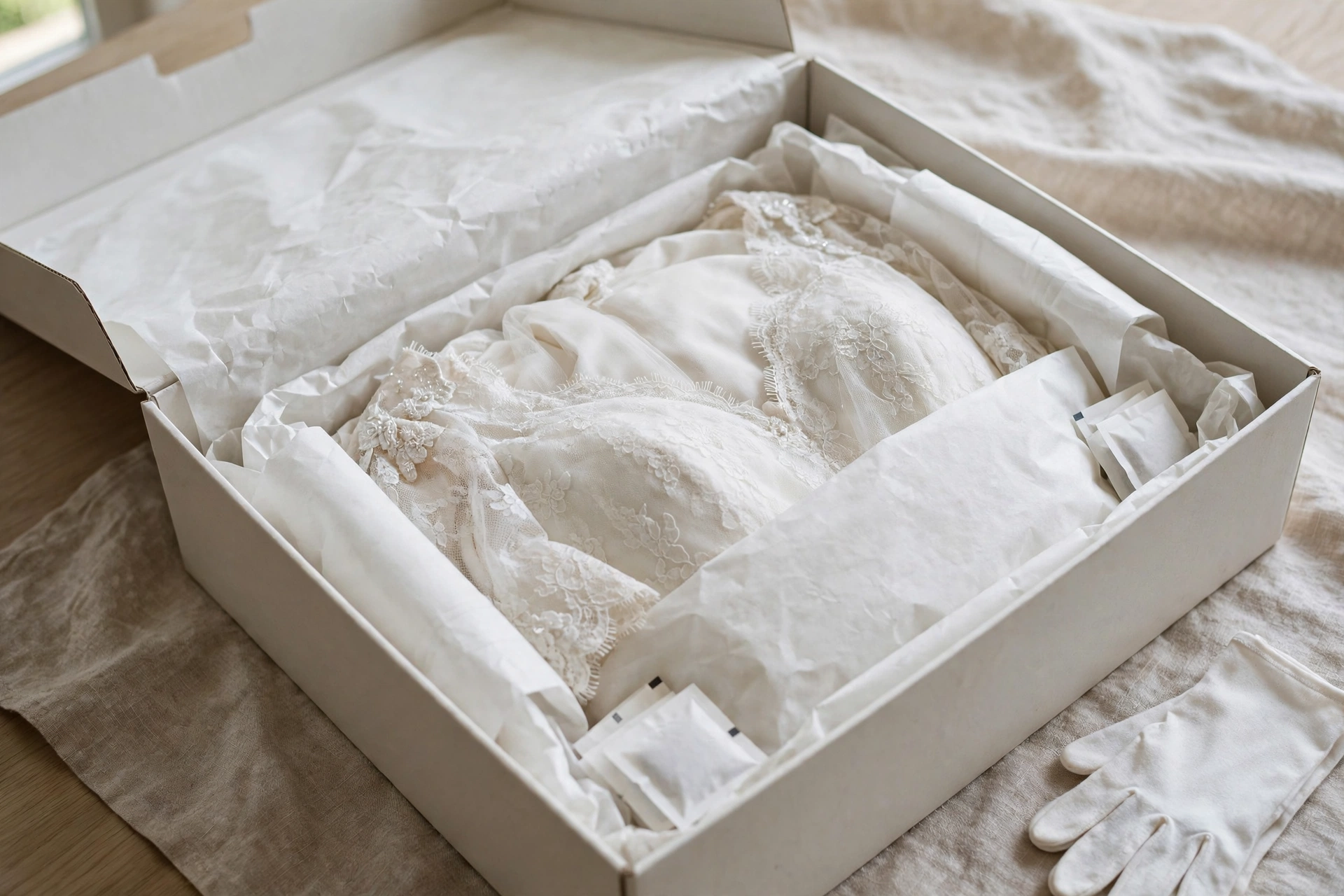
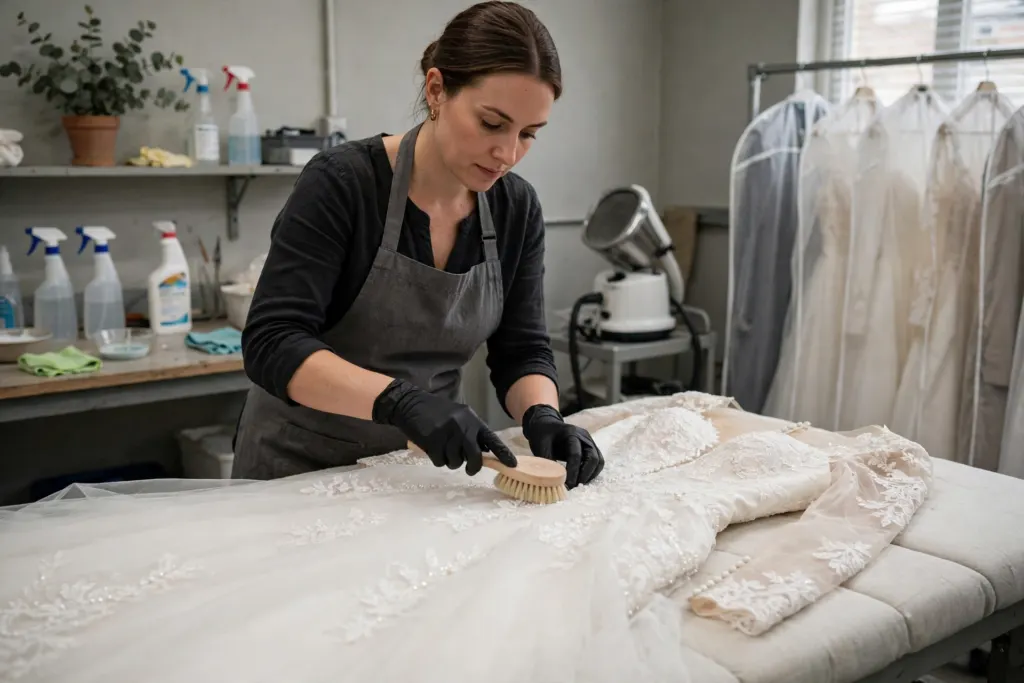
A specialist wedding dress preservation service typically involves a thorough, gown-safe cleaning process — different from standard dry cleaning, since it must account for delicate beading, sequins and lace — followed by careful boxing in an acid-free container with acid-free tissue paper supporting the folds, sleeves and train.
The cleaner inspects the dress first, treats individual stains by hand, and chooses cleaning methods suited to each fabric rather than putting the whole gown through one generic process. After cleaning, the dress is folded loosely with tissue supporting every fold so no sharp creases form, then placed in an acid-free box that blocks light and moisture. Some services use a museum-style method that keeps the dress in a sealed, low-oxygen environment to further slow discolouration. Ask any service you consider to walk you through their exact process before you hand over your dress.
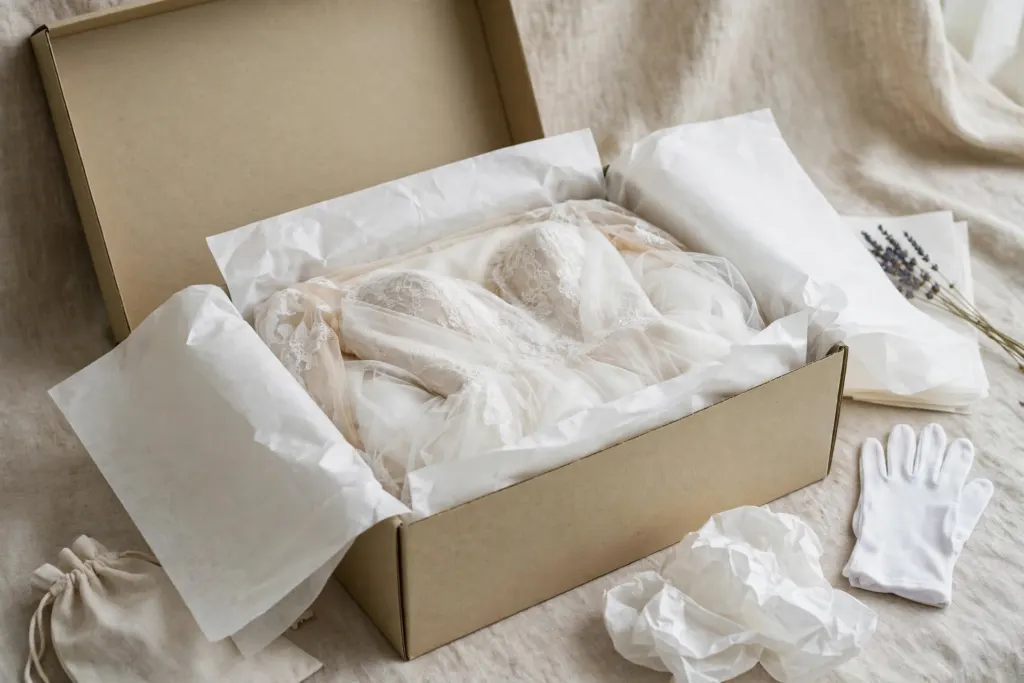
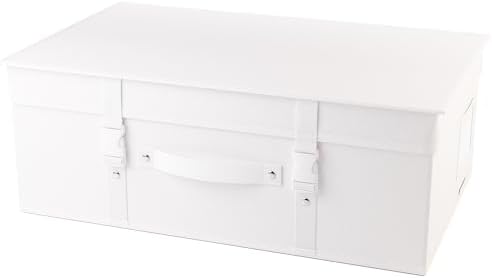
- ACID FREE STORAGE: A perfect wedding dress preservation kit, made from pH neutral fabric and includes 10 sheets of acid …
- MEMORY ARCHIVE: Safe long term box for wedding dress storage which means you can pass your gown and veil through generat…
- CONVENIENT: Travel size within airline hand luggage restrictions, suitable for travelling with your wedding dress box, a…
3. Choosing a Preservation Service
Look for a company that specialises specifically in bridal gowns rather than a general dry cleaner — bridal fabrics like silk, satin and delicate lace require different handling than everyday garments, and a general cleaner may not know how to treat beading or boning safely.
Ask whether they offer a guarantee against yellowing, and request to see examples of their box and packing method before committing. Read reviews from brides, not just the company’s own testimonials, and check how long they have been in business. Ask about turnaround time, whether they insure the dress while it is in their care, and what happens if a stain cannot be fully removed. A good service will answer all of this patiently; a vague or rushed answer is a reason to look elsewhere.
4. DIY Interim Preservation
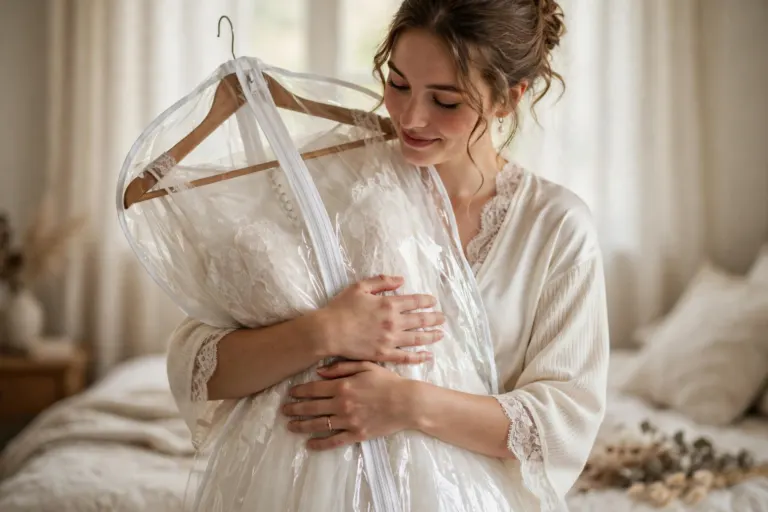
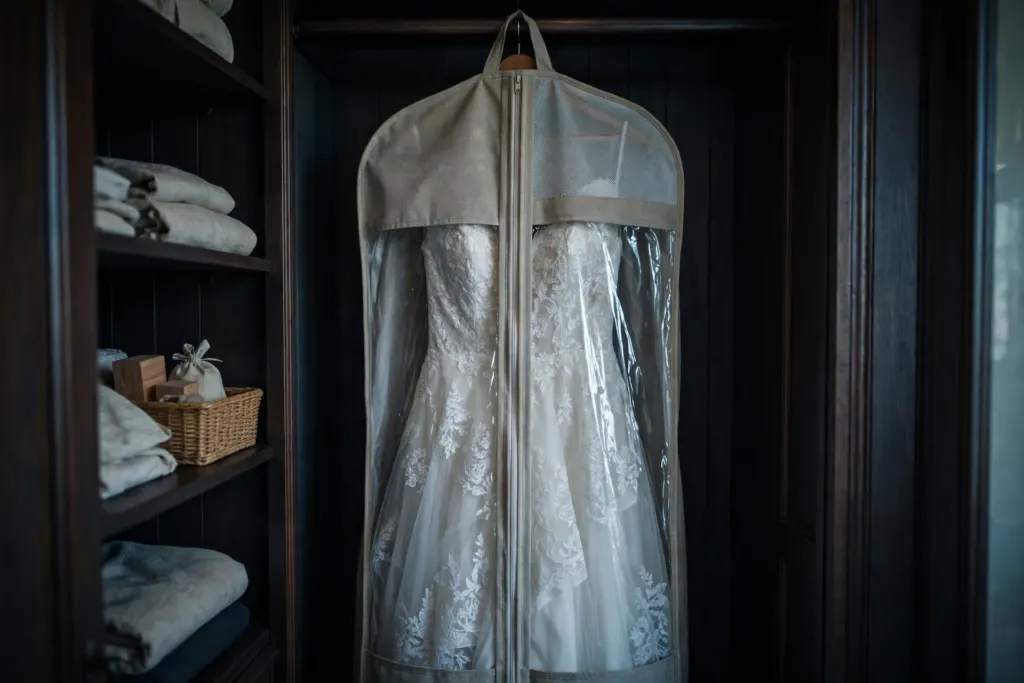
If you are storing the dress yourself in the interim, the rules are simple but important. Avoid vacuum-sealed bags, which can crush delicate fabric and trap moisture, and avoid regular plastic dry-cleaning bags for the same reason.
Use a breathable, acid-free garment bag, and fold the gown loosely with acid-free tissue paper stuffed into the sleeves, bodice and folds to prevent sharp creasing. Handle the dress with clean, dry hands, and work on a clean sheet or towel rather than a bare floor. Store it away from direct sunlight and in a climate-controlled space — not a garage, attic or damp basement. This is interim care, not a replacement for professional preservation, but it buys you safe time while you choose a service or save for one.
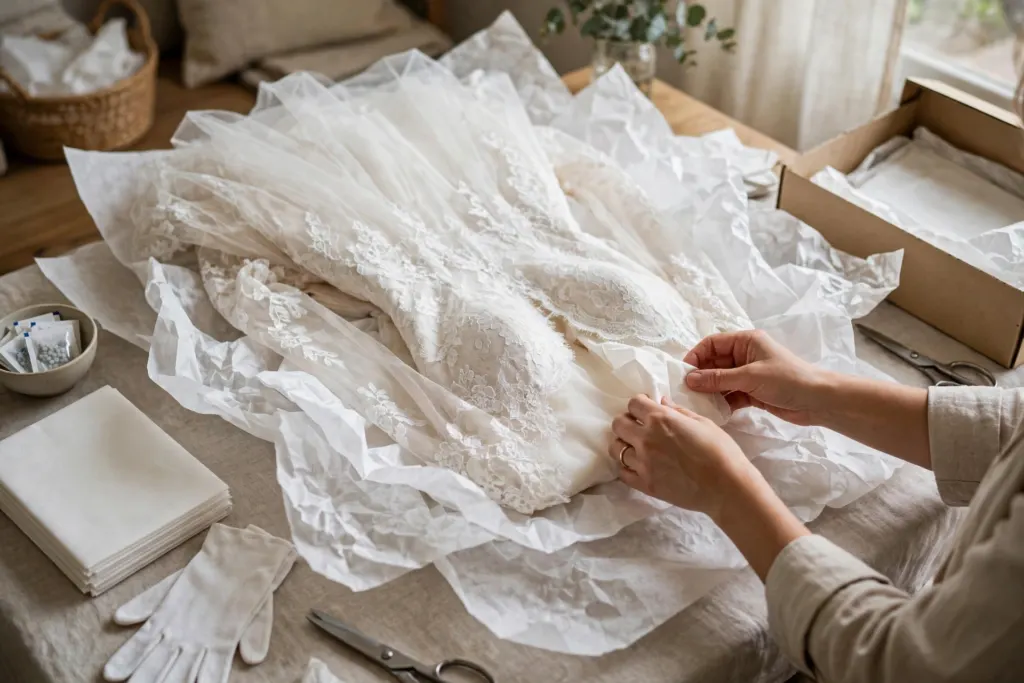

- Abundant quantity: This bulk pack includes 100 sheets of tissue paper bulk, ensuring you have an ample supply for your d…
- Effortless shaping and folding: Crafted from high-quality paper, these acid-free tissue paper offer easy shaping, foldin…
- Optimal preservation: Designed acid will degrade paper components, these no acid tissue paper provide excellent protecti…
5. Timing Matters
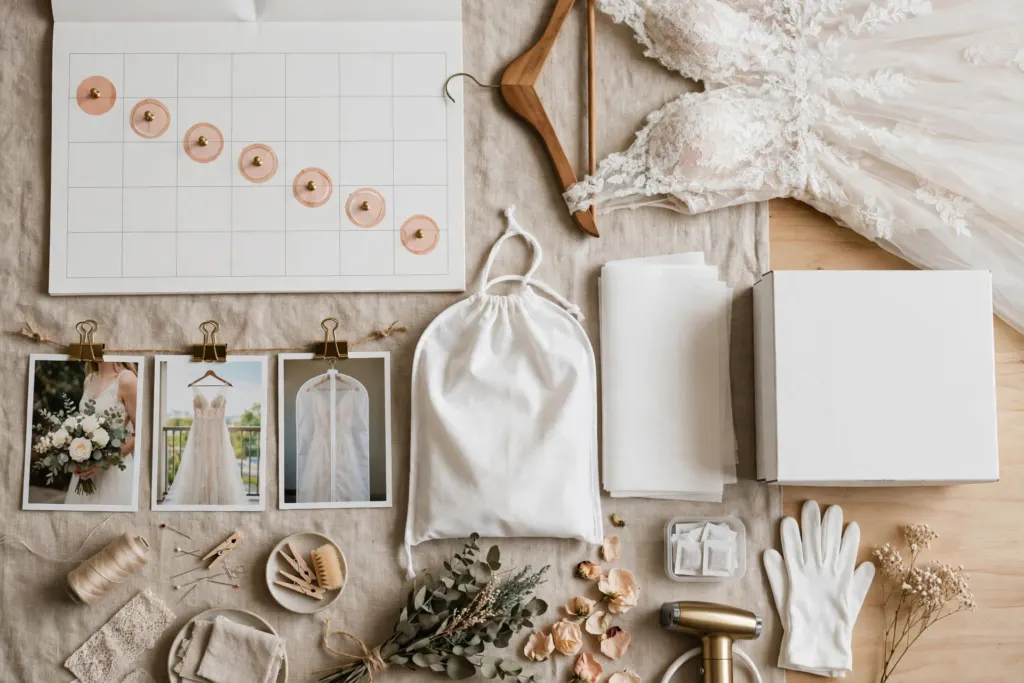
Preservation specialists generally recommend having the dress cleaned and boxed within a few months of the wedding, before any invisible stains have time to set and oxidise. The sooner the cleaning happens, the better the result — sugar and champagne residue are far easier to remove in the first weeks than after a year.
If it has been years since your wedding and the dress has been stored casually, it is still worth having it professionally assessed — many stains and issues can be treated even after significant time has passed, though some yellowing may be permanent. Do not assume it is too late. A specialist can tell you honestly what can and cannot be saved, and a partial improvement is still better than leaving the dress to deteriorate further in the wrong storage.
6. What Not to Do
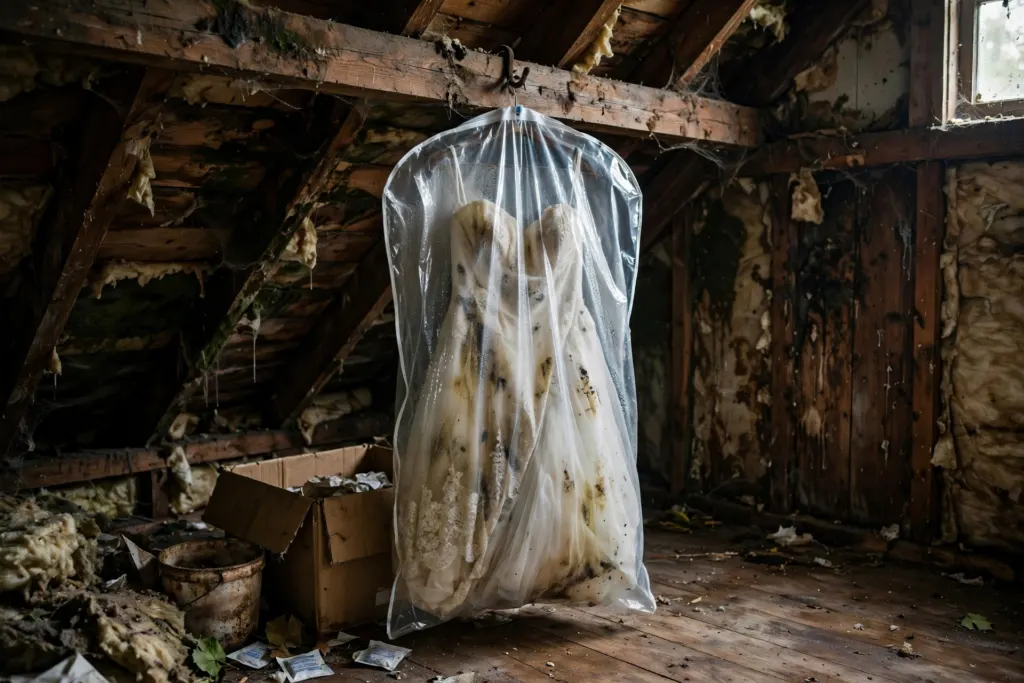
Avoid regular plastic dry-cleaning bags for long-term storage, as they trap moisture and can yellow fabric over time. Do not store the dress hanging for extended periods either, as the weight of the fabric can stretch delicate seams and beading — flat, boxed storage is almost always the better long-term choice.
Do not vacuum-seal the dress, do not store it in a damp basement or hot attic, and do not fold it tightly without tissue paper, which creates sharp creases that weaken the fibres along the fold lines. Do not use ordinary coloured tissue paper, which can transfer dye, and do not hang the dress on a wire hanger, which can distort the shoulders. Most preservation damage is not caused by one big mistake but by small, everyday storage choices that add up over years.
7. Beyond the Box (Display Window, Partial Preservation and Keepsakes)
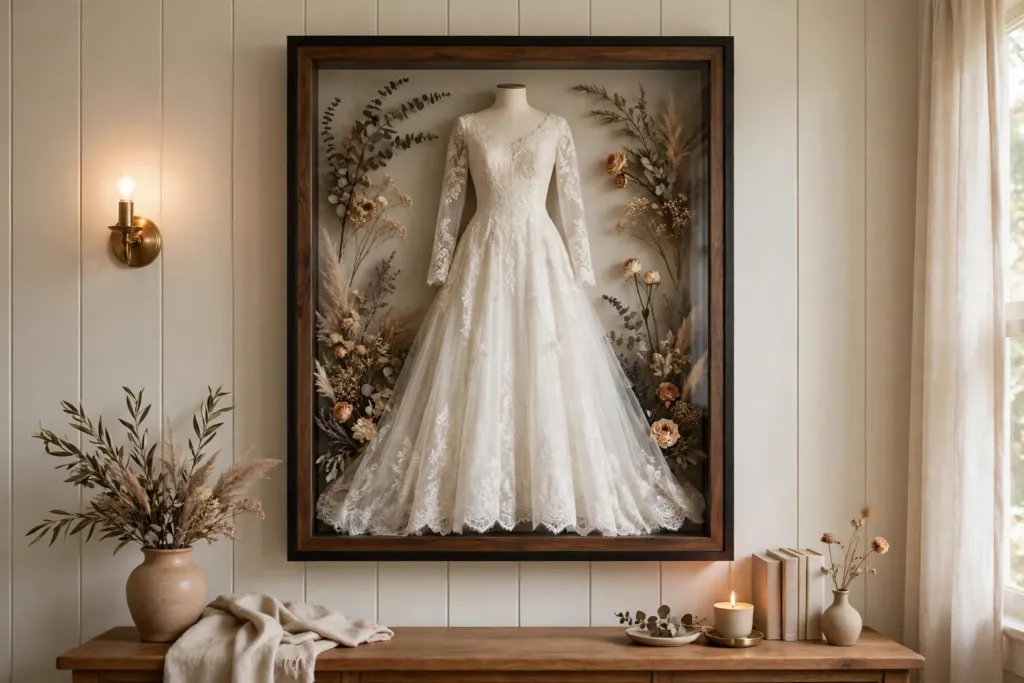
Preservation does not have to mean the dress disappears into storage forever. Many preservation boxes include a small display window, letting you display the boxed gown as a decorative keepsake rather than hiding it in a closet — a lovely option if you want to see your dress every day.
Some brides choose to have a portion of the dress preserved this way while repurposing the rest into a smaller keepsake item, getting the best of both worlds: the bodice or train preserved intact, and a lace panel turned into a christening gown, a shadow box or a memory quilt. Talk to your preservation service about partial options before the dress is boxed, since it is much easier to plan this in advance. A well-preserved wedding dress is not just a stored garment — it is a piece of your story kept intact for whenever you, or a future family member, want to see it again.

- 【Heirloom-Quality Cotton Protection】Pure cotton fabric with 233 thread count breathes naturally so your wedding dress st…
- 【All Your Accessories, in A Single Bag】2 organza pockets on the garment bags for dresses hold shoes, veil, jewelry, unde…
- 【Fits Big Gowns Without the Squeeze】Long trains and poofy ballgowns fit with ease. The wedding dress storage bag offers …
FAQ
How much does professional wedding dress preservation cost?
It varies by region, dress complexity and the service, but most brides pay for a specialist cleaning plus an acid-free box and a guarantee. Get quotes from two or three bridal specialists before deciding, and compare what is included — cleaning method, box type, guarantee length and insurance — not just the headline price.
How long does a preserved dress last?
A professionally cleaned and acid-free boxed dress can last for decades without yellowing, provided the box stays sealed, cool, dark and dry. Open the box only when needed, and keep it away from attics, basements and direct sunlight.
Can a dress be preserved years after the wedding?
Yes, in most cases. A specialist can assess old stains and storage damage and treat what is treatable. Some yellowing may be permanent, but many dresses improve significantly even after years in casual storage, so it is always worth an assessment.
Closing
A well-preserved wedding dress is not just a stored garment — it is a piece of your story kept intact for whenever you, or a future family member, want to see it again. Clean it promptly, choose a specialist you trust, store it flat in an acid-free box, and avoid the small storage mistakes that quietly ruin dresses. Your future self will be glad you took the time.