
11 Wedding Hairstyles for Thin Hair That Add Real Volume
Fine, thin hair on your wedding day is not a flaw to hide — it is a brief to work with, and stylists who know fine hair genuinely rate it, because it holds a set beautifully. The secret behind every look below is the same: volume is built, not wished for. It comes from padding hidden under a bun, a parting moved two inches sideways, a braid pulled wider loop by loop, or well-placed clip-ins. These eleven wedding hairstyles for thin hair are honest about how each one works, what it needs, and how it holds through a day of photos, hugging and dancing. One classic trick deserves a mention too: a fringe fakes density where thinness shows first, and our guide to bridal hairstyles with bangs shows the shapes that do it best.
11 Wedding Hairstyles for Thin Hair That Genuinely Look Fuller
1. The Low Bun with Hidden Padding
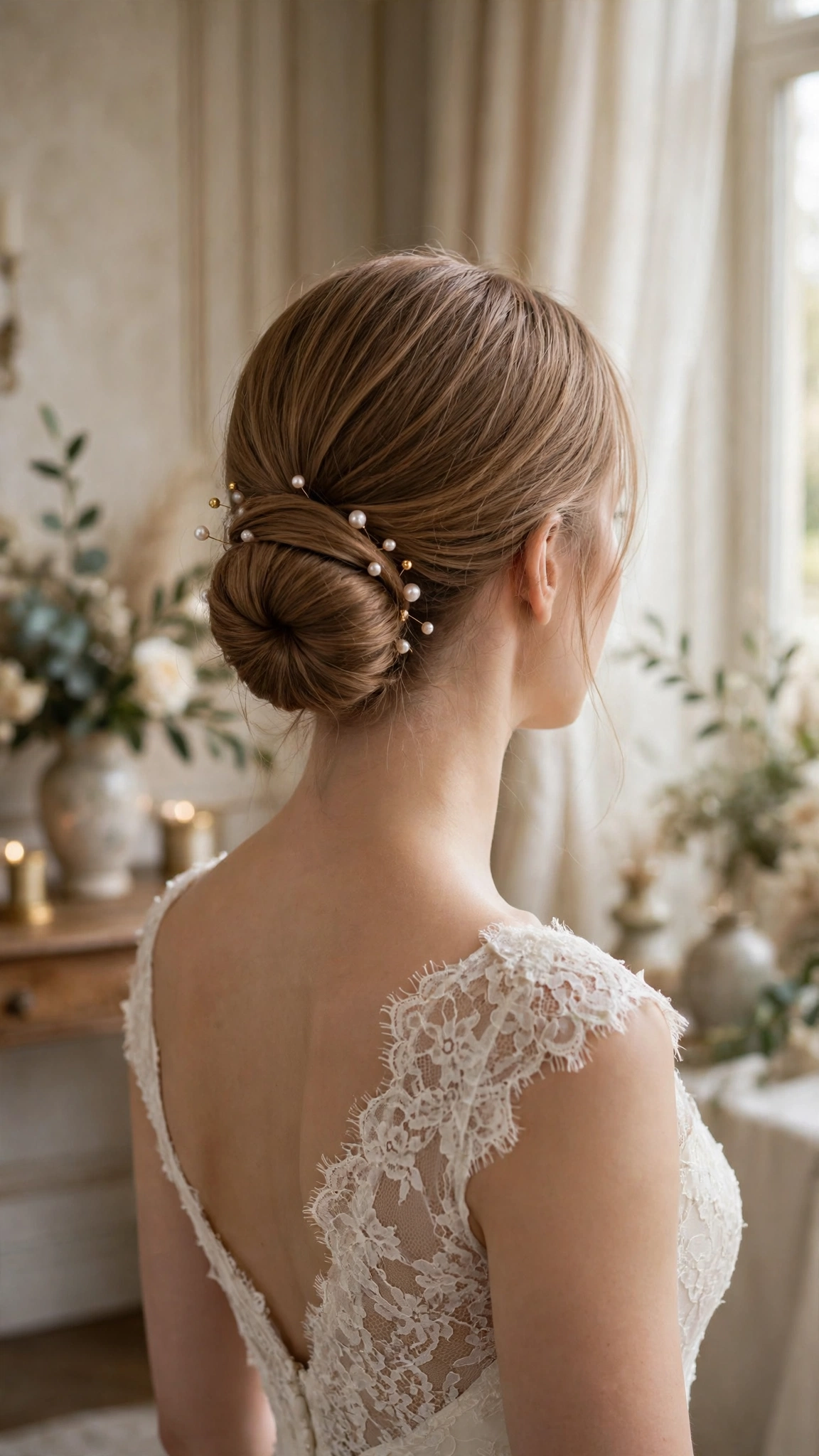
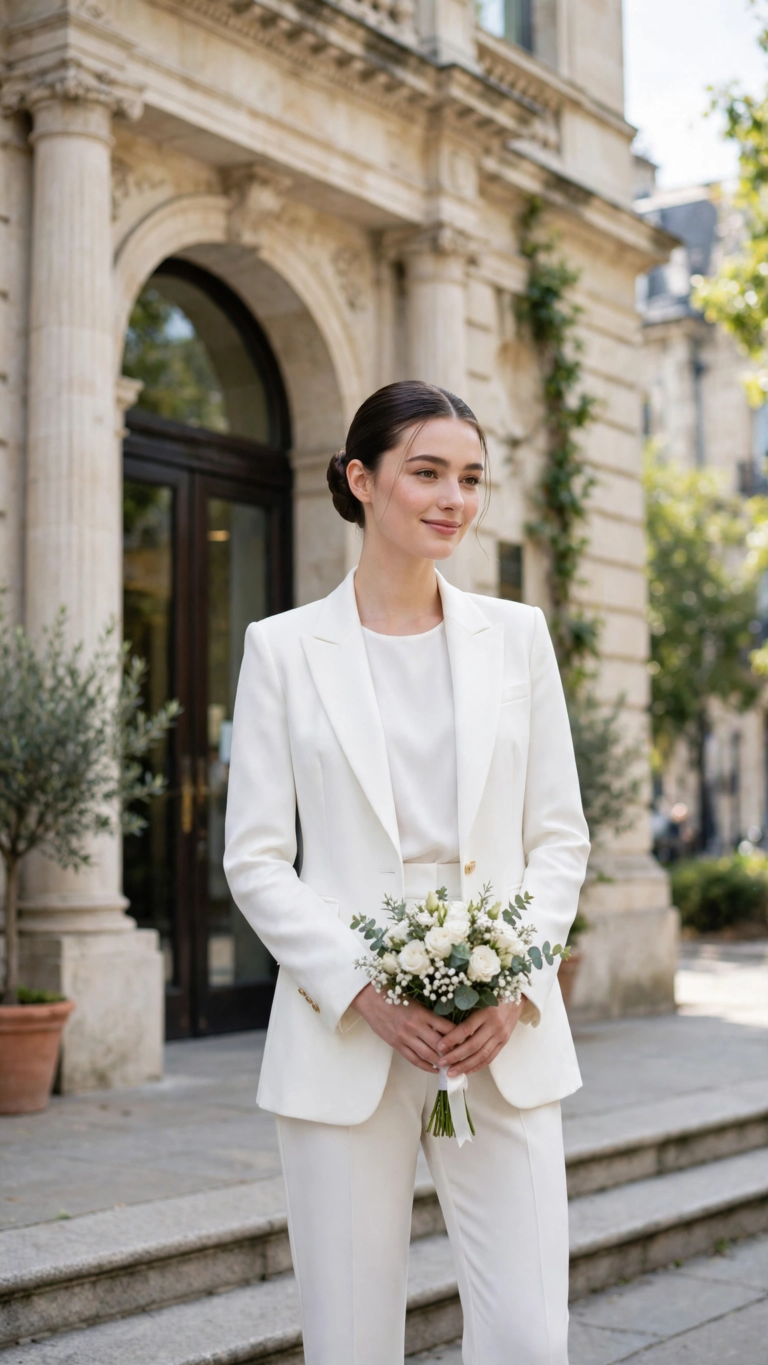
The fullest-looking updo for fine hair is not made of hair alone — it is made of hair wrapped over padding. Your stylist gathers your hair into a low ponytail, slides a small mesh bun maker onto it, then fans your own hair over the form and pins it smooth. The result is a bun with the proportions of hair three times thicker, and the padding weighs so little it stays comfortable all day. A gentle tease at the crown stops the top looking flat — think of it as the engineered cousin of our romantic bridal updos. One honest note: match the padding to your hair colour and pin it at four points, or a pale gap can flash when you turn your head.
2. Soft Waves with Serious Root Lift
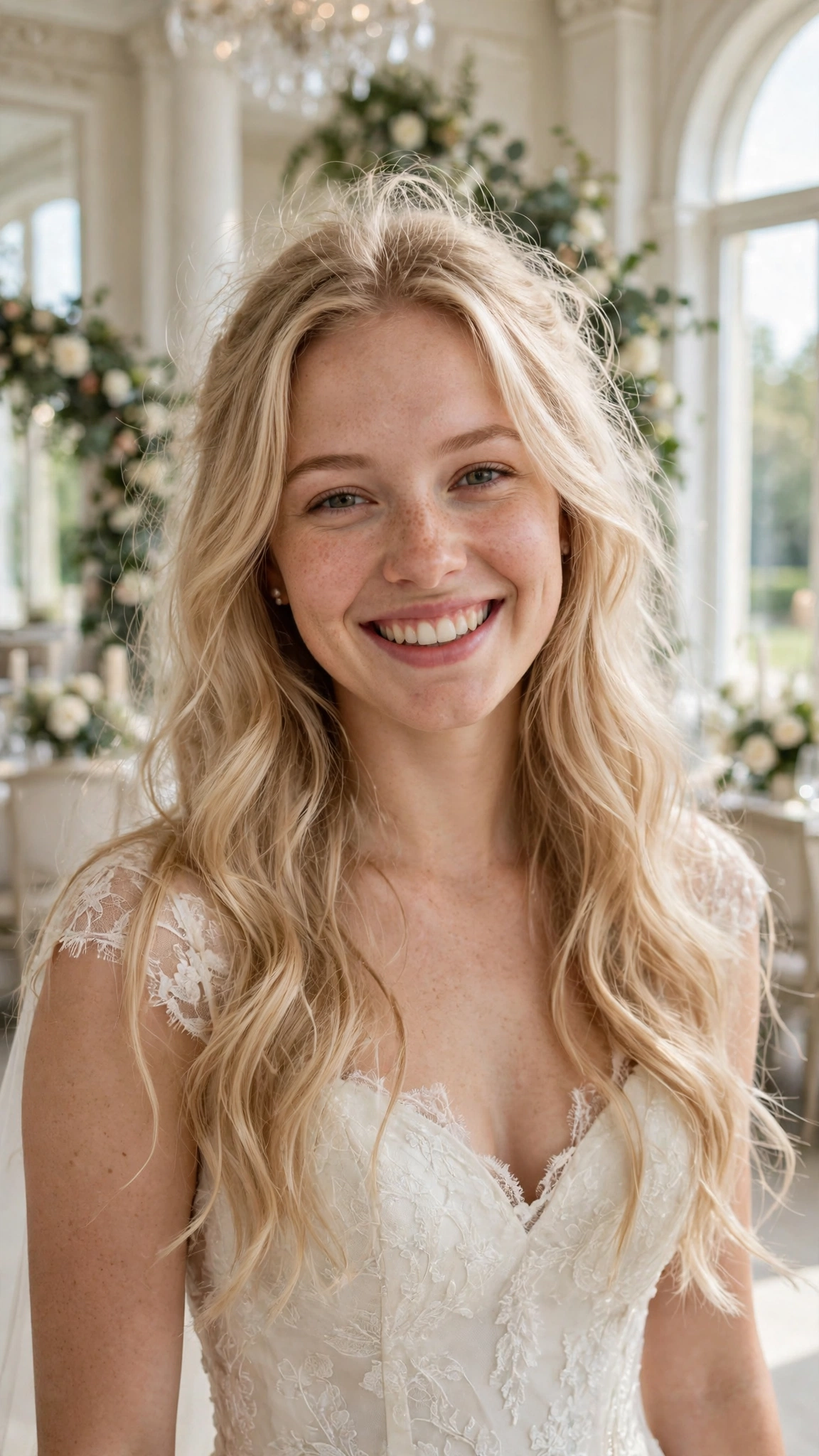
Waves are the fine-haired bride’s best optical illusion: a flat sheet of hair shows every gap, while a waved one catches light and shadow and reads as twice the amount of hair. The lift starts before any curling — mousse in the roots, then a blow-dry upside down or lifted section by section on a round brush. Only then are loose waves tonged in, alternating direction so they cannot clump into ropes. Among wedding hairstyles for thin hair, this photographs fullest in natural light. The honest part: root lift fades over hours, so the waves must be loose enough to still look good at seventy per cent lift — tight, high curls collapse into strings by the evening.
3. Half-Up with Hidden Clip-Ins
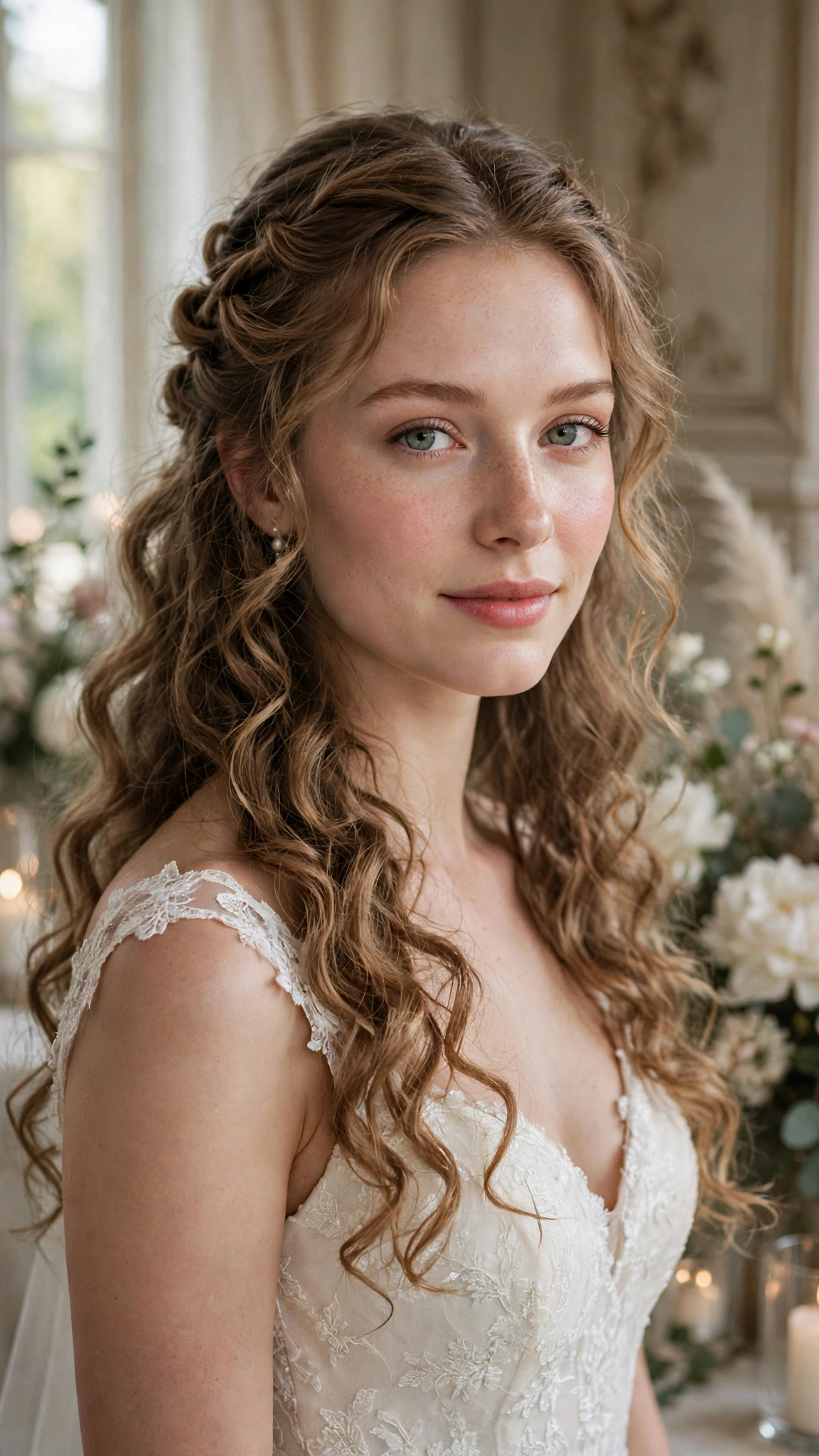
The half-up style is where clip-in extensions earn their keep. Two or three wefts clipped into the lower back section — never at the crown, where clips could show — quietly double the hair falling over your shoulders, while your own hair twists across the top and hides every join. Because the added hair sits underneath, it moves like yours, and real-hair wefts take a curl the same way. This is the most forgiving route to a full-looking half-up style, and it suits detailed dress backs, since the hair still lifts away from the neckline. Be upfront with your stylist: clip-ins need looser curls and gentler backcombing to stay invisible all day.
4. The Textured Pixie, Styled Up
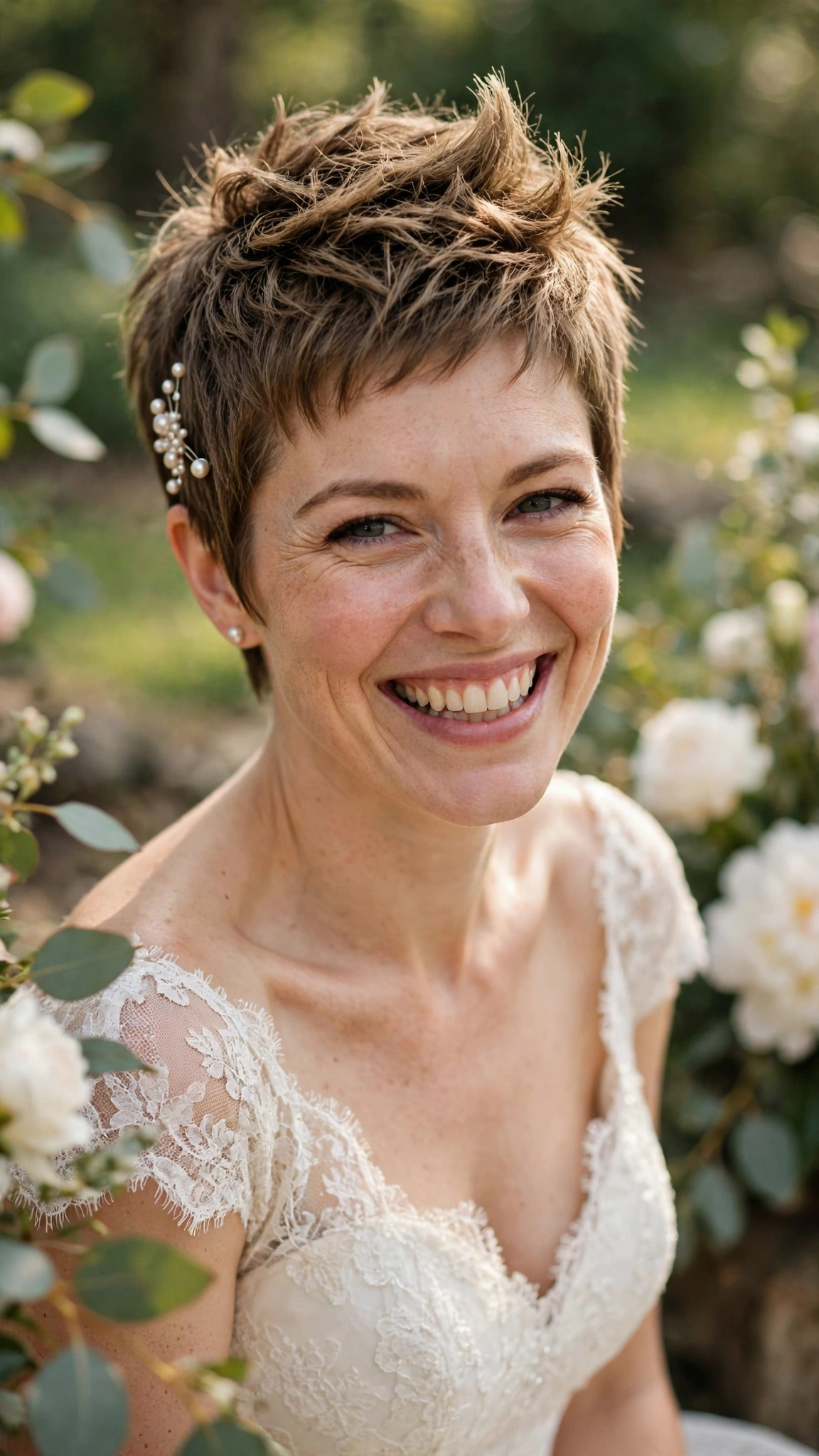
Short, fine hair has one big advantage: there is so little weight that nothing drags it down. A pixie styled with matte texture paste, pushed up and slightly forward into a soft quiff, can look denser than long thin hair ever will, because every strand stands where it is put. The trick is product choice — a dry, matte paste or powder adds grit and separation, while anything glossy or wet-look makes fine hair stringy and thinner-looking. Add a delicate pin on one side and it reads unmistakably bridal. It sits happily alongside our favourite simple wedding hairstyles: five minutes of styling, zero faff, identical in the last photo to the first. A trim two weeks before the wedding keeps the shape sharp.
5. The Braided Crown That Borrows Thickness

A braid on thin hair, left just as it comes, can look like a shoelace — but a pancaked braid is a different thing entirely. Once pinned in place, your stylist pulls the outer edge of each loop gently outward, widening the plait until it looks two or three times thicker. The braid borrows its fullness from width rather than bulk, and sitting along the hairline, it also covers the front and parting, where thin hair shows most. Leave the remaining hair in loose waves. Of all the wedding hairstyles for thin hair in this list, this one fools the camera most completely in close-ups. The trade-off: pancaked loops are delicate, so the braid needs a mist of spray and a spare pin for repairs.
6. The High Ponytail with a Wrapped Base
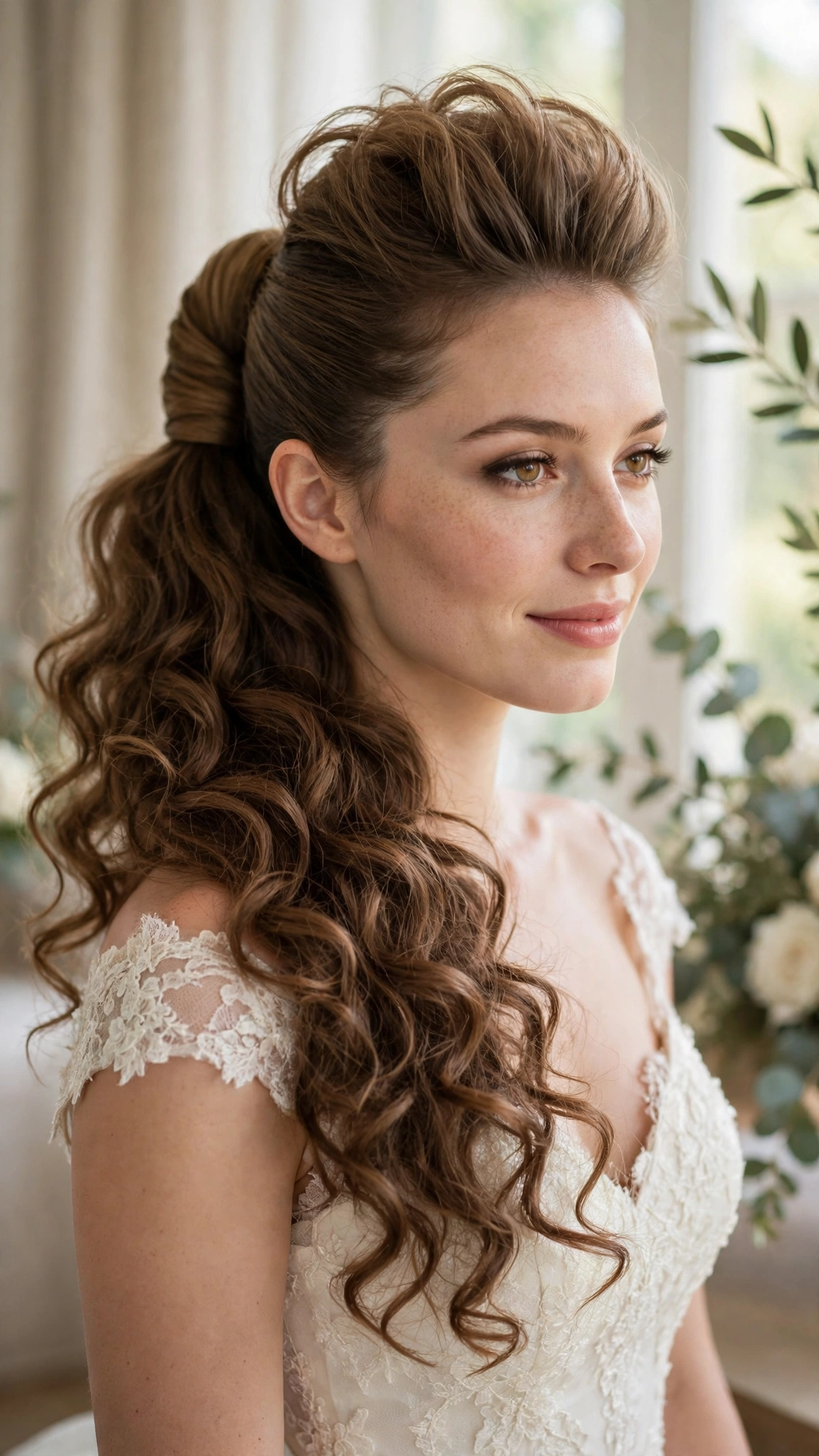
Height is volume you can see from across the room. A high ponytail on fine hair works when the crown is backcombed first and the ponytail is anchored in two stages — a smaller inner ponytail at the crown, the rest of the hair gathered up around it — so the base sits proud instead of painted flat against the head. A section of hair wrapped around the elastic visually thickens the base. Curl the tail softly and it swings with more presence than the hair that went into it. Keep the sides smooth, not teased: the contrast with the full, curled tail sells the illusion. It holds superbly, too — the one style gravity helps instead of fights.
Three Helpers That Build Volume Before You Even Start Styling
Most wedding hairstyles for thin hair are won or lost before the first pin goes in. These are the three helpers doing the heavy lifting:
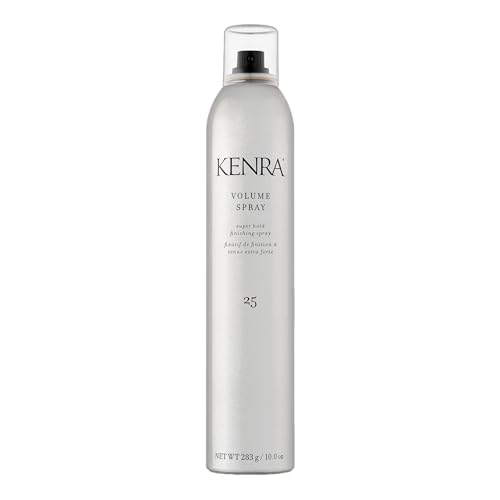
- Wind resistant up to 25MPH
- High humidity resistance up to 72 hours
- Super hold up to 120 hours
A strong-hold finishing spray that works double duty. Misted over backcombing it gives the tease something to grip; sprayed over the finished look, it locks in root lift and waves without brittle crunch. Spray from arm’s length — fine hair drowns in product fast.
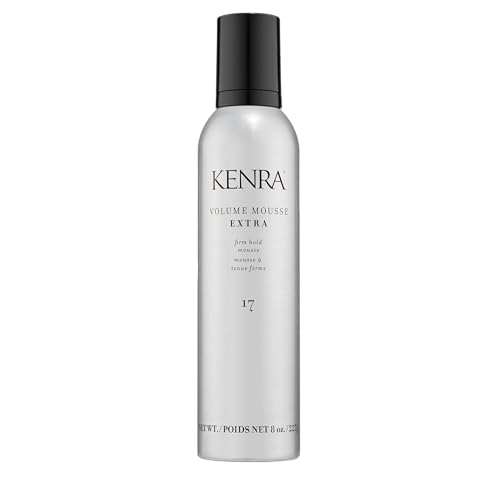
- Non-drying, non-flaking lightweight formula
- Provides styling control without stiffness or stickiness
- Tames frizz & conditions
Mousse is where real root lift comes from. Worked through damp roots and blow-dried in, it coats each strand so it stands away from its neighbours instead of lying flat — that tiny separation is most of what “volume” is. One golf-ball-sized amount is plenty; more weighs fine hair down.
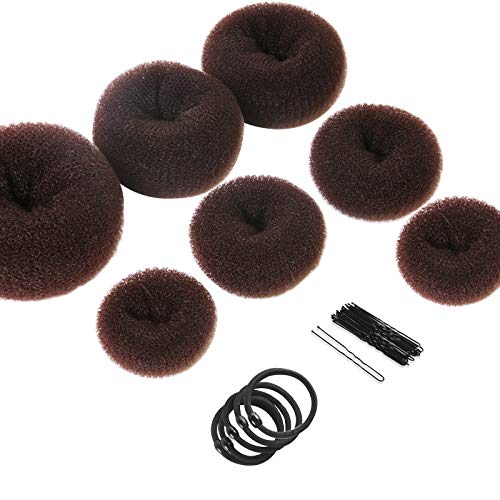
- Multiple Sizes: Available in 4 sizes (Extra-large, Large, Medium, Small), The small size fits for children and people wi…
- Easy To Use: The hair bun makers are easy to use, even for those who are not experienced with hairstyling. Simply gather…
- Stylish & Beautiful: Great for creating a new perfect bun – bun donut hairstyles, buns, sock bun hairstyles, ballet buns…
The humble donut is the padding behind the bun and chignon in this list. A mesh bun maker in your hair colour gives the style its size and shape while your hair forms the surface — the join is invisible. Buy two sizes: small for a chignon, larger for a statement bun.
7. The Side-Part Blowout
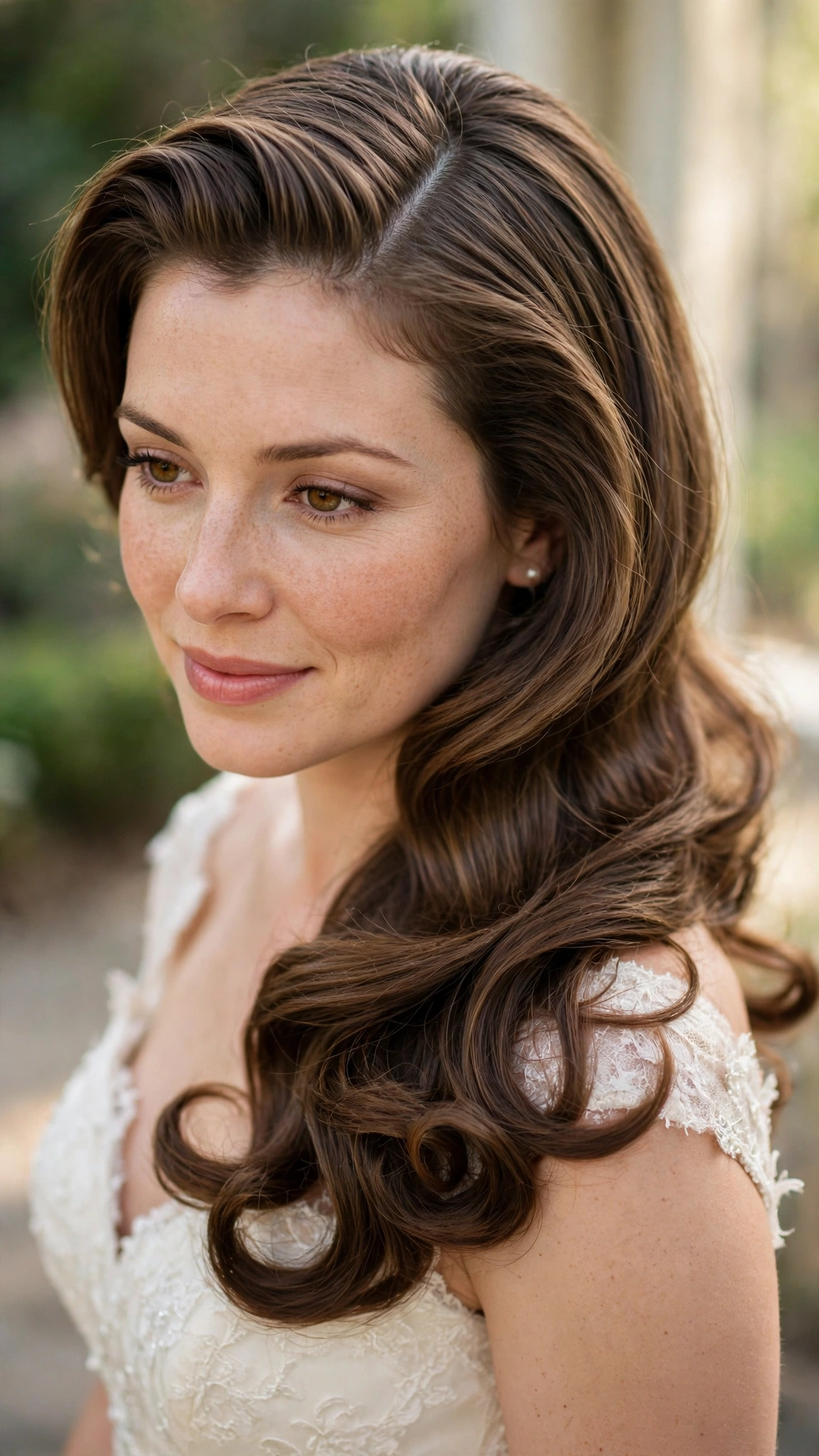
Moving your parting is the cheapest volume trick there is. Hair that has lain in a centre part for years falls flat along a trained line; flip it into a deep side part and the roots stand up against their habit, creating genuine lift where the eye measures fullness. A round-brush blowout with the ends bent under completes the illusion, and the heavy side sweeps across the forehead, covering the sparser temple area. It is the fastest transformation in this list — fifteen minutes, no accessories, no additions. Honest limits: it suits fine rather than extremely short hair, and the flipped part creeps home during the day, so set it with spray while the hair is still warm from the dryer.
8. The Twisted Updo on a Teased Base
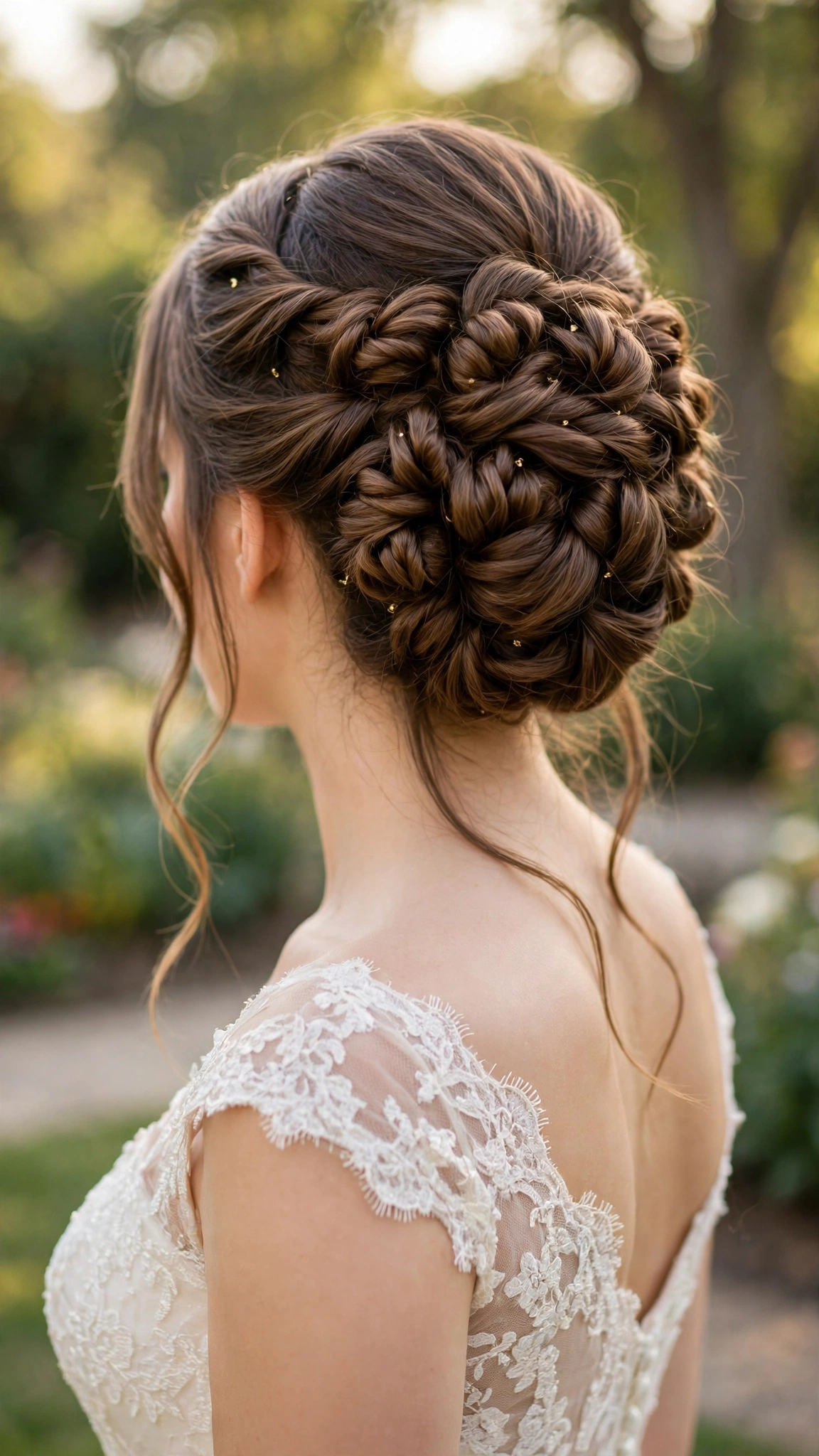
Twists are kinder to fine hair than smooth styling, because a twist’s ridges and shadows suggest a depth flat hair cannot. This updo starts with light backcombing all over — not a beehive, just enough grit that pins hold — then the hair is taken in small pieces, twisted, and pinned across the back of the head in overlapping layers. Every twist adds visual scale, so the finished updo looks intricate and abundant rather than scraped together. It is an excellent choice for thin, slippery hair, since the teased base gives every pin something to bite on. Ask for two soft pieces left free at the front: on fine hair a hard frame looks severe, while softness at the edges reads romantic.
9. The Chignon Built on a Donut

The chignon has a reputation for needing a lot of hair, but the classic version was always built on a form. Here a small donut sits at the nape, your hair is smoothed over it and tucked under, and the result is a neat, generous knot suggesting far more hair than went into it. It is the most structured of the wedding hairstyles for thin hair on this list, making it the safest bet for formal venues and veils — a veil comb slides in just above the chignon and stays put. Keep the cover smooth but never drum-tight: pulling too tight shrinks the chignon and can show the scalp at the parting, while a softer cover looks bigger. Pearl-headed pins dress it up instantly.
10. Loose Curls with Clip-Ins Throughout

If you have always pictured long, full curls, clip-in extensions are the honest way to get there for one day. The method matters more than the hair itself: wefts go in low, in a horseshoe around the back, each clipped onto a lightly teased shelf of your own hair, and your own top layer falls over the joins. Then everything is curled together in same-sized sections, which is what makes the blend invisible. Pairing the look with a veil? Read the placement tips in our guide to long hair wedding hairstyles with a veil — added weight changes where a comb sits best. Choose real-hair wefts, and if between colours, match slightly darker: darker underneath reads as shadow and depth.
11. Vintage Finger Waves
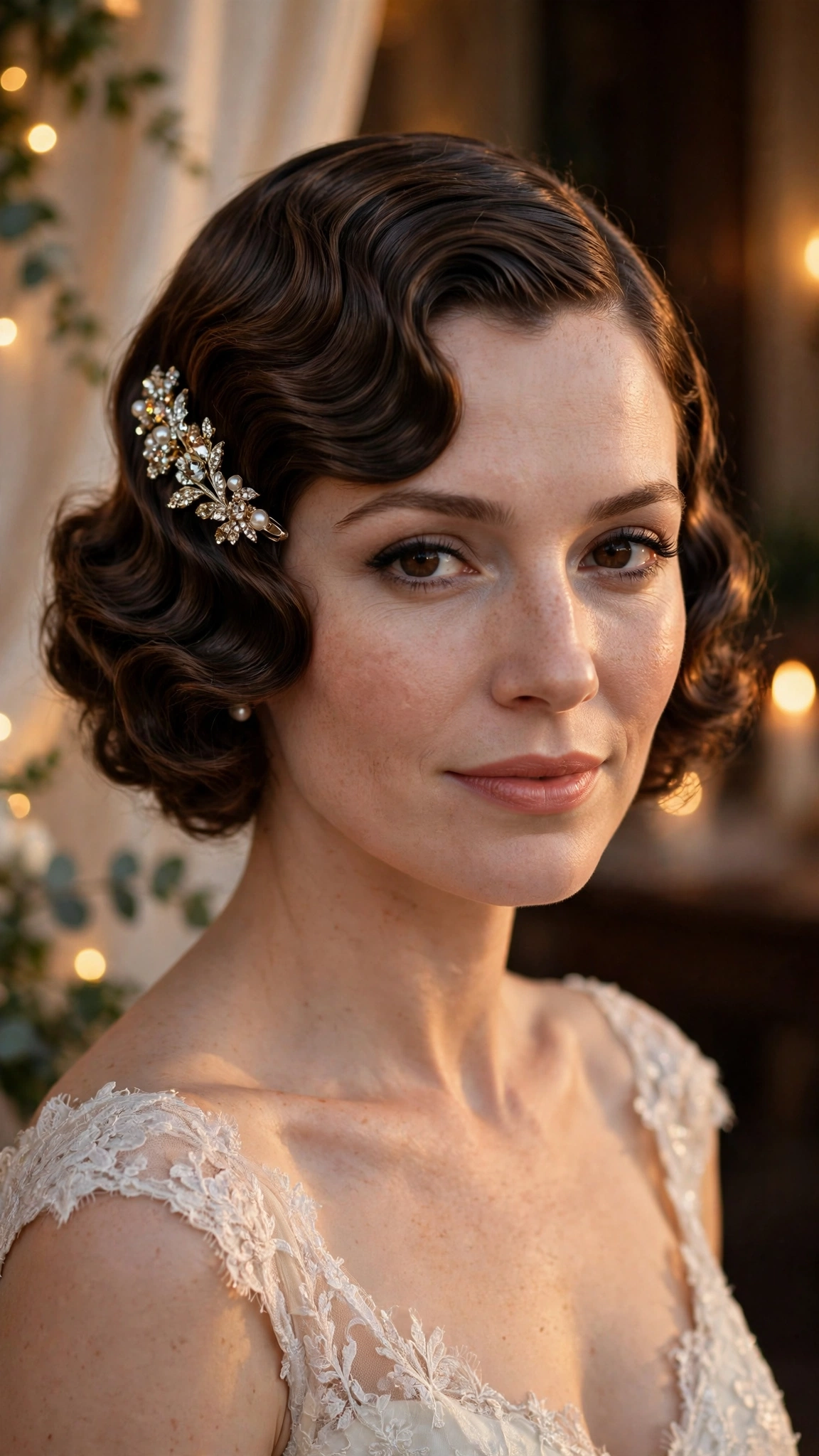
Sculpted finger waves are the great exception to the rule that fine hair needs texture: here, gloss and shape do all the work. The hair is set in flat S-waves close to the head, usually with a deep side part, so there is no loose bulk to look sparse — the eye reads the shine and the sculpted line instead. It is a strong option for fine hair at shorter lengths, where updos are a struggle, and suits vintage, city and evening weddings beautifully. The waves are set with clips and setting lotion and must cool completely before being dressed out; rushed ones fall flat, patient ones hold all night. Finish with a decorative slide at the part side. It asks the least of your natural thickness of any style here.
How to Choose Between These Wedding Hairstyles for Thin Hair
Start with what your hair actually does, not what you wish it did. If it holds a curl, the waves, half-up styles and clip-in looks are all open to you; if it drops straight within the hour, build on padding, donuts and twists, which hold their shape whatever your hair does. Trial any padding or extensions beforehand, so you know how the weight feels by hour six. For an outdoor winter wedding, our winter wedding hairstyles round-up covers which of these survive wind, hats and static best, and The Knot’s wedding hairstyles guide is worth a browse for classic inspiration. Choose the style whose trick suits your hair — that is what makes it look effortless.
Frequently Asked Questions
Which wedding hairstyles for thin hair last the longest through the day?
The built styles: the padded low bun, the donut chignon and the twisted updo. Their shape comes from forms and pins, not your hair’s own body, so they look the same at midnight as at noon. Loose styles built on root lift relax gradually.
Will backcombing damage my fine hair?
Gentle backcombing for one day, done with a proper teasing brush and removed patiently afterwards, does fine hair no lasting harm. The damage comes from ripping a brush through it dry at 1 a.m. Detangle slowly from the ends, or work conditioner through first and let it melt out in the wash.
Do clip-in extensions show on very thin hair?
They can, if placed too high or too close to the parting. Placed low, on lightly teased shelves, with your own top layer over the joins, all curled together, they are effectively invisible. Real-hair wefts matched at the ends — where the eye compares — blend best.
How early should I trial a volume style?
Six to eight weeks before the wedding, with the actual padding, donut or clip-ins you plan to wear. Volume tricks are fitted things: donut size, weft placement and parting depth need testing on your own head, with time to order a different size if the first guess is wrong.