11 Wedding Ceiling Draping Ideas That Transform Any Venue
Most couples spend months choosing centerpieces and flowers, then never look up at their reception. That is a missed opportunity, because wedding ceiling draping is the fastest way to change how a room feels. Fabric overhead softens hard architecture, lowers a cavernous ceiling, and wraps the celebration in one romantic gesture. Whether your venue is a grand ballroom, a working barn or a blank-canvas hall, the eleven ideas below show how wedding ceiling draping can give you the setting your photos deserve.
Why the Ceiling Deserves a Place in Your Decor Budget
The ceiling is the largest surface in most reception spaces, so it quietly sets the mood for everything beneath it. Bare beams, exposed ductwork and dated fixtures photograph exactly as they look — unless draping intervenes. Fabric overhead can disguise a tired ceiling, absorb echo, and make a huge warehouse feel intimate. It also gives photographers a beautiful backdrop in wide, first-dance shots, where the ceiling fills the frame’s top. The reception decor guides at The Knot rank overhead treatments among the highest-impact upgrades a couple can make, because guests experience them from every seat. Think of draping as the finishing layer connecting tables, lighting and flowers into one whole.
11 Wedding Ceiling Draping Ideas to Steal for Your Day
1. Classic White Chiffon Swags
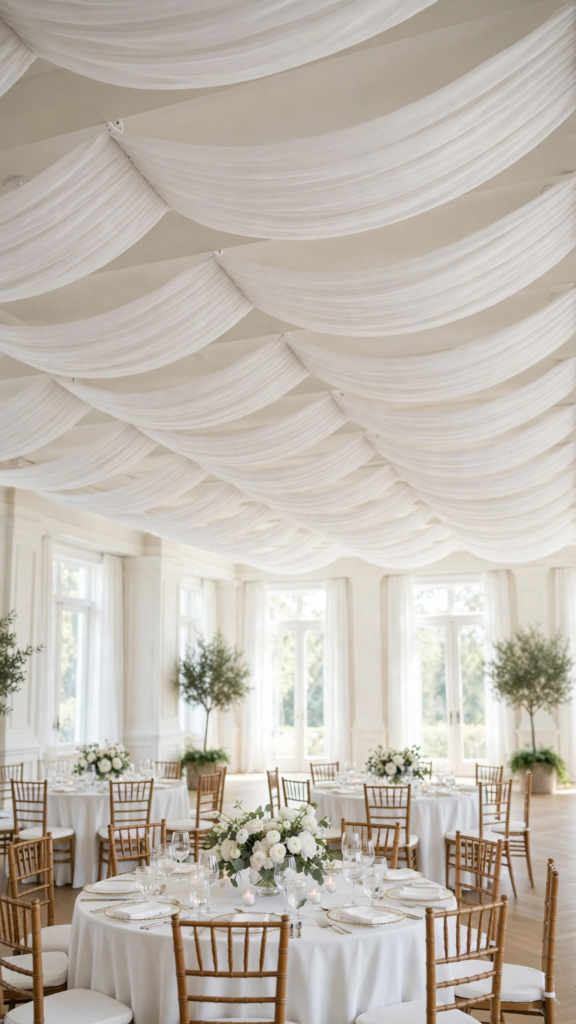
The look that started it all: long lengths of white chiffon hung in gentle, even swags that run the length of the room like soft waves. Chiffon is the workhorse fabric of wedding ceiling draping because it is feather-light, inexpensive in bulk, and forgiving — its slight texture hides imperfect hanging. Run swags in parallel rows for a formal feel, or cross them in a grid for something tailored. White brightens everything beneath it and flatters every palette. Tip: keep the dip consistent — roughly one foot of sag for every six feet of span — so the rhythm looks intentional rather than droopy.
2. Draping Woven with Fairy Lights

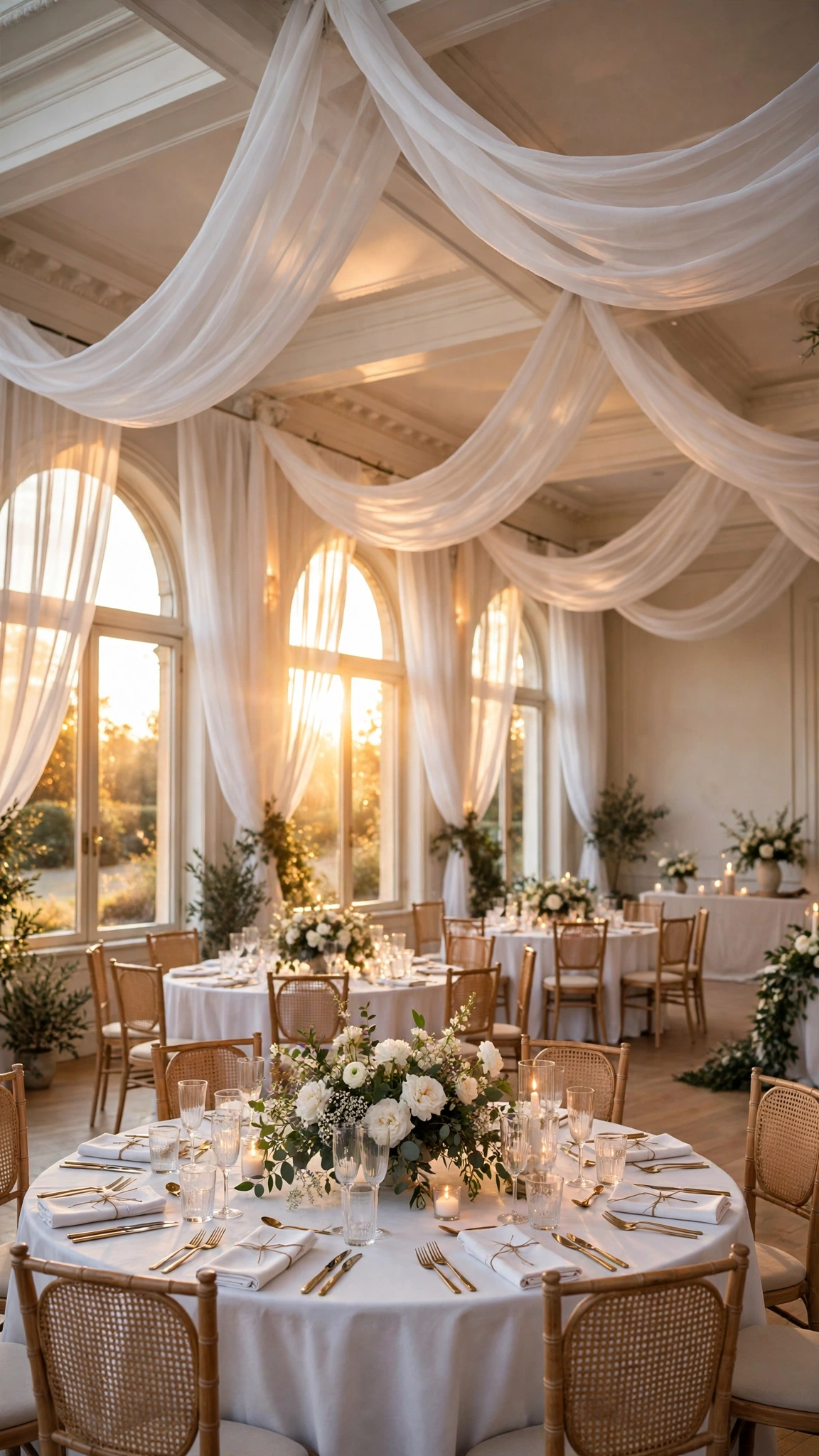
If your reception runs into the evening, thread warm-white fairy lights through or just above the fabric and the ceiling becomes a night sky. The fabric diffuses each bulb into a soft, even glow that is famously kind to skin in photographs. It works especially well in tents and clear-span halls with no decorative ceiling to compete with. Keep the fabric sheer — voile or chiffon — so light glows through it rather than sitting on top. Tip: put the fairy lights on a dimmer — full brightness for dinner, lower for dancing gives two moods from one installation.
3. Center-Peak Tent Draping
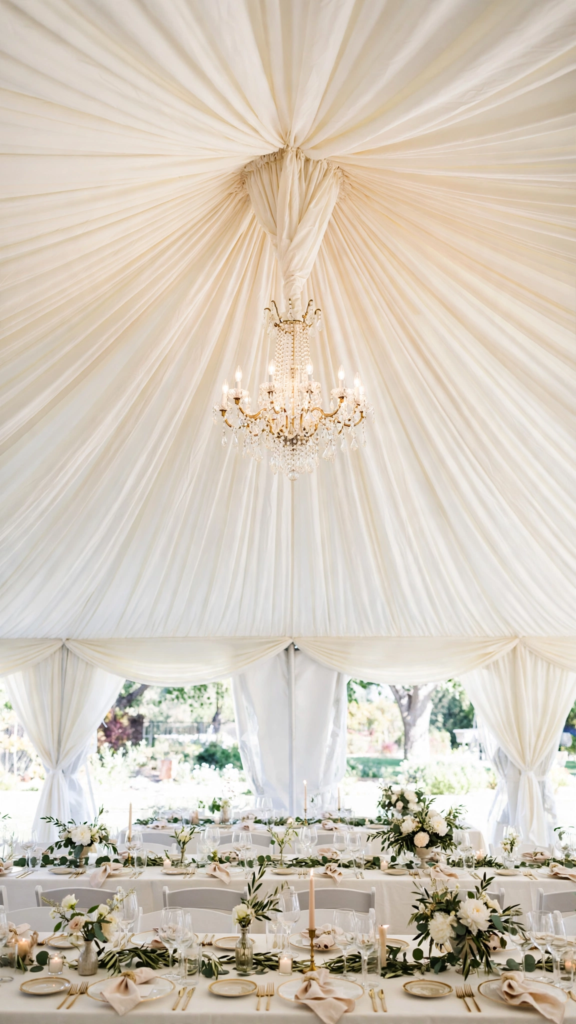
A pole tent practically begs for this: every fabric panel is gathered at the center peak and radiated out to the side poles, hiding the frame and creating a pavilion. Ivory and champagne glow in daylight and stay warm under evening lighting. The center point is the natural home for a chandelier, floral hoop or cluster of lanterns. It is also practical outdoors, softening wind movement and muffling rain noise. Tip: confirm your tent company’s rules early — some require their own crew to hang anything from the frame.
4. Draping Framed Around a Crystal Chandelier
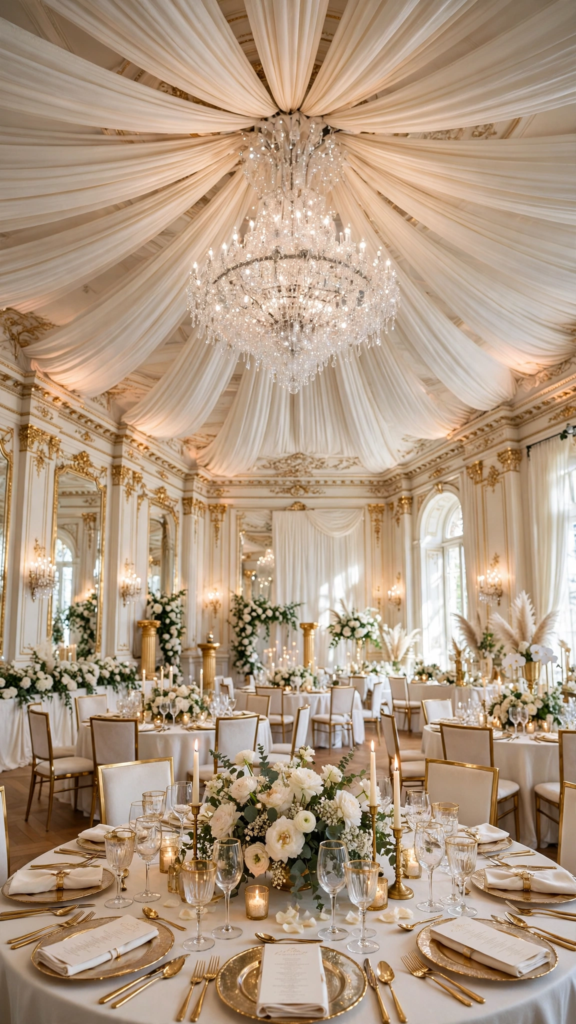
For ballrooms and historic venues, let the chandelier be the star and draping its supporting cast: ivory panels sweep outward from its mounting point like a fabric sunburst, throwing crystal light across the room. That contrast is what makes the look feel genuinely luxurious rather than simply decorated. Keep table decor slightly quieter if you choose this route — the drama is overhead. Tip: hire a qualified rigger — fabric must never rest on a hot fixture, and a professional keeps the required clearance with fire-rated fabric.
5. Greenery-Woven Draping
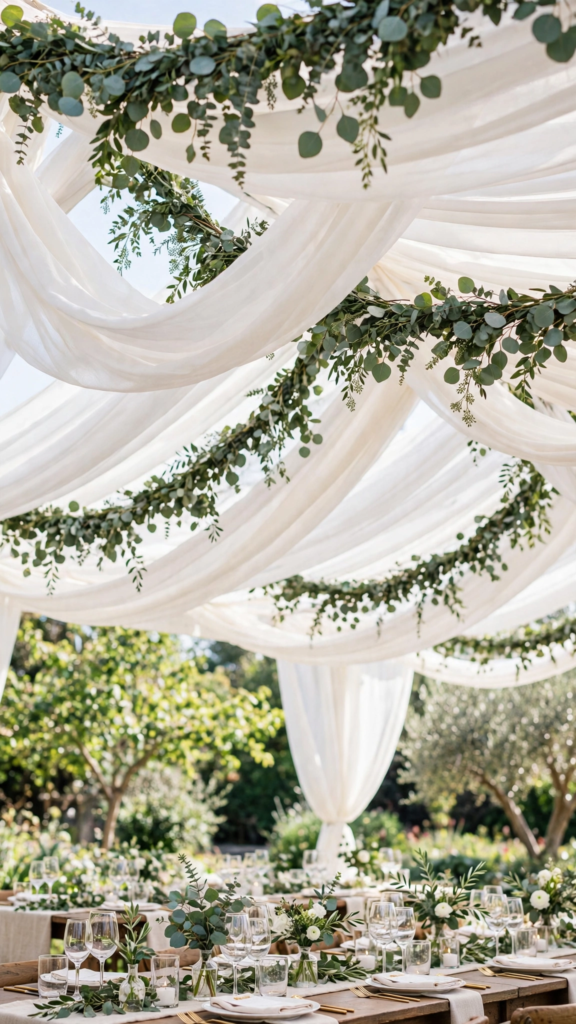
Weave garlands of eucalyptus, ruscus or ivy along the draping and the ceiling becomes a hanging garden. Greenery adds what fabric cannot: organic texture and a third dimension, leaves catching light and shadow overhead. It suits garden and vineyard weddings especially. Run greenery along every swag for abundance, or concentrate it at the gathering points for a lighter, cheaper effect. Pair it with a backdrop from our wedding flower wall ideas and the whole room reads as one garden. Tip: use high-quality faux greenery overhead — real garlands wilt under warm lights and can drop leaves into dinner.
6. Circular Spoke Draping Over the Dance Floor
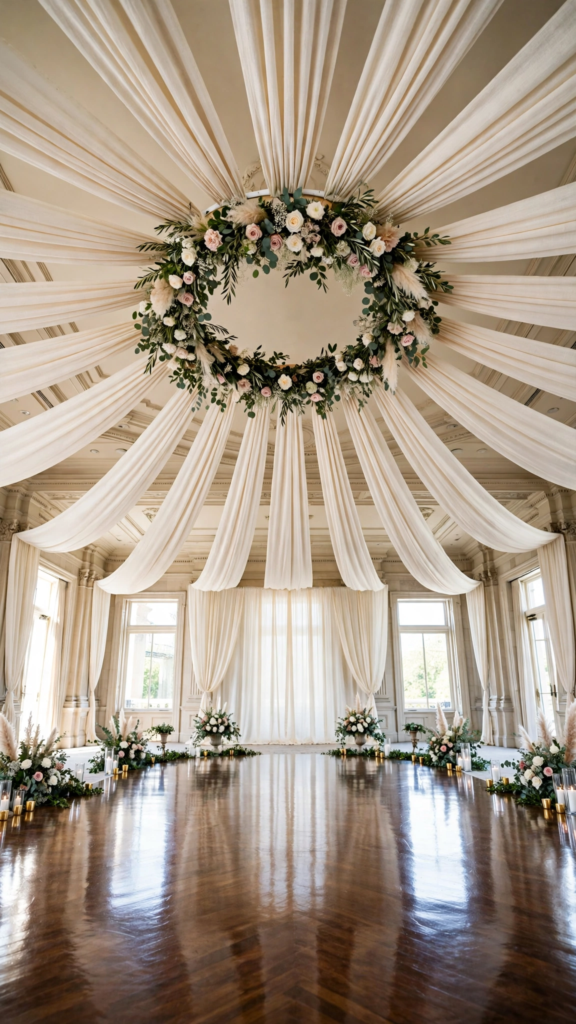
Instead of covering the whole ceiling, concentrate fabric in one spectacular circle: panels radiate from a central hoop directly over the dance floor or sweetheart table. The effect is deliberate and architectural — guests instantly know where the party’s heart is, and your first dance happens beneath a canopy made for photographs. A floral hoop or ring of Edison bulbs at the center finishes the design. This focused approach is also the budget-smart version of wedding ceiling draping, dressing one zone beautifully instead of a whole hall thinly. Tip: center the ring over the dance floor, not the room — the two are often different, and the photos will notice.
3 Draping Essentials Worth Buying for a DIY Ceiling
Professional installation suits large venues, but smaller spaces and tents are genuinely DIY-able. These three workhorses appear in almost every draping kit.

- High-Quality Polyester Fabric: Made from 100% polyester, this voile fabric offers a smooth, consistent weave with a soft…
- Semi-Sheer Opacity: Features an estimated 10%–30% opacity under normal lighting conditions. Opacity may vary based on li…
- Designed for Layering: The semi-transparent construction makes it well-suited for dressmaking, either layered for added …
A full bolt of white chiffon is the foundation of most draping designs: light enough to hang safely, sheer enough to glow under lights, inexpensive enough to buy generously. Order more than your measurements suggest — swags consume about a third more fabric than the straight-line distance — and use leftovers on the ceremony arch and table runners.

- Connectable Twinkle String Lights: The Christmas lights can link up to 3 strands together, reaching a total of 295 feet,…
- Waterproof&UL Listed: LED string lights come with a safe 29 V low voltage UL certified plug, keep the fairy string light…
- Timer&Memory Function: Press and hold the button of the plug for 3s until the green light on, then the timer function st…
Fairy lights do double duty: they outline the swags and provide the warm glow that makes fabric look expensive after dark. Choose warm white around 2700K rather than cool white, buy connectable strands, and plan roughly one strand per swag line.

- 【Heavy Duty Hold with Thickened & Larger Adhesive Pad】 Upgraded thickened and larger adhesive pad provides extra surface…
- 【No Drill Installation – Damage-Free & Easy Setup】 No tools, no drilling, no nails required. These no drill ceiling hook…
- 【Waterproof & Outdoor Ready Sticky Hooks】 Made with premium waterproof adhesive and stainless steel, these outdoor stick…
Venue-friendly fixings separate a smooth install from a damage-deposit dispute. Heavy-duty removable hooks and clear clips let you rig draping in halls that forbid screws or nails, and they come away cleanly at midnight. Test one hook overnight with the real fabric weight first — adhesive strength varies hugely between brands.
7. A Sheer Voile Full Canopy
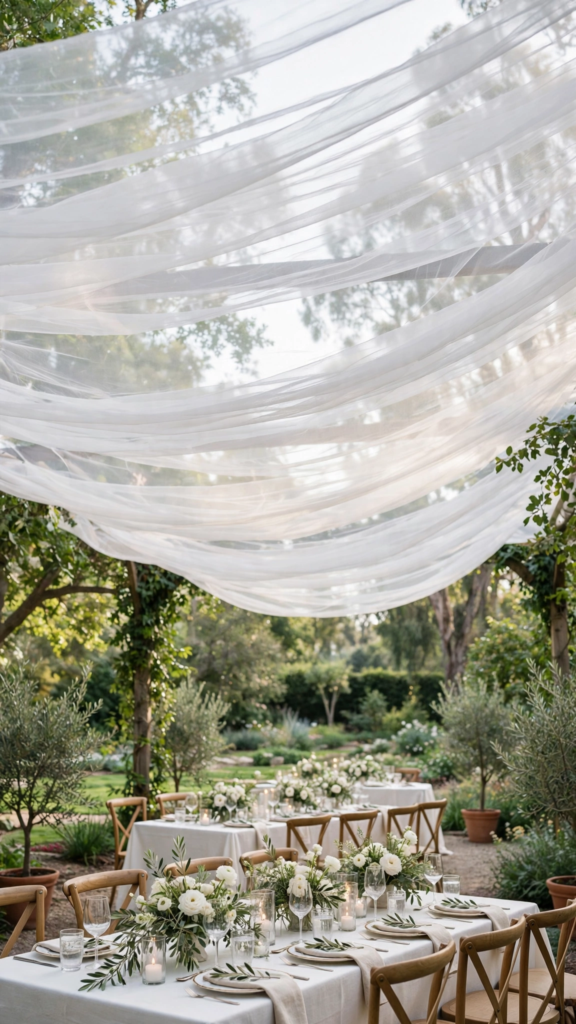
Where swags leave ceiling visible, a full canopy covers it entirely: layers of sheer voile stretched wall to wall until the original ceiling disappears. The room feels cocooned and intimate even at two hundred guests, and daylight filtering through the layers is soft and shadowless — a gift for photography. This is the strongest fix for a genuinely ugly ceiling, like a dated drop ceiling in a hall. It echoes the immersive effect of a floral tunnel wedding entrance, extending that sense of arrival across the whole reception. Tip: a full canopy needs more fabric and rigging points than any other style here — get a site measure before ordering.
8. Blush and Champagne Colored Draping
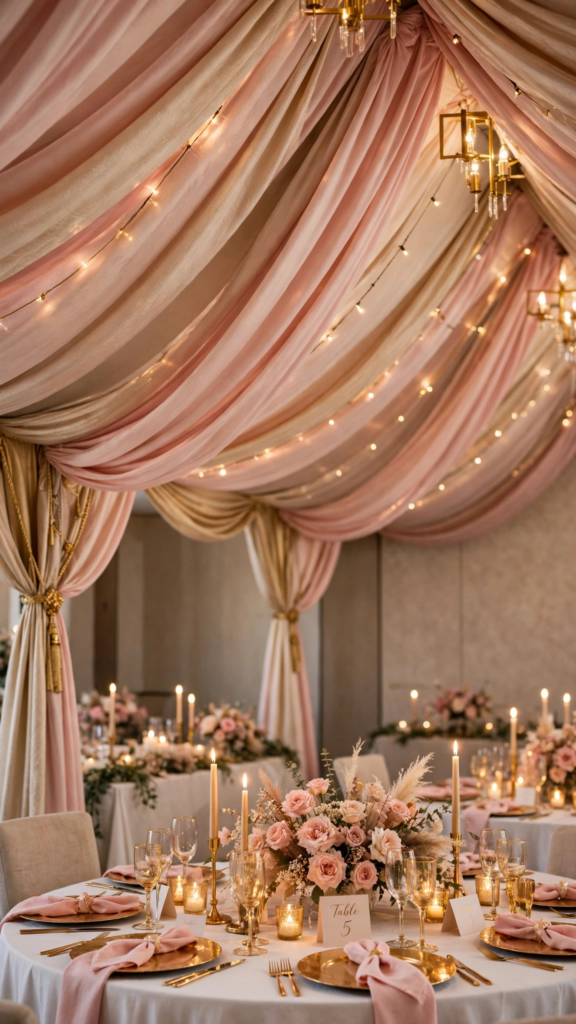
White is classic, but fabric is the cheapest way to wash a whole room in your palette: blush or champagne draping tints the light itself, so the reception feels dipped in your colors. Colored fabric pairs beautifully with a tonal tablescape — imagine it above the arrangements in our wedding floral centerpiece ideas, where the hues repeat at eye level. Keep the color soft — saturated fabric overhead darkens a room and casts unflattering tones on skin. Tip: view a fabric sample under your venue’s actual lighting first; blush can turn orange under warm bulbs.
9. Rustic Draping Between Barn Beams
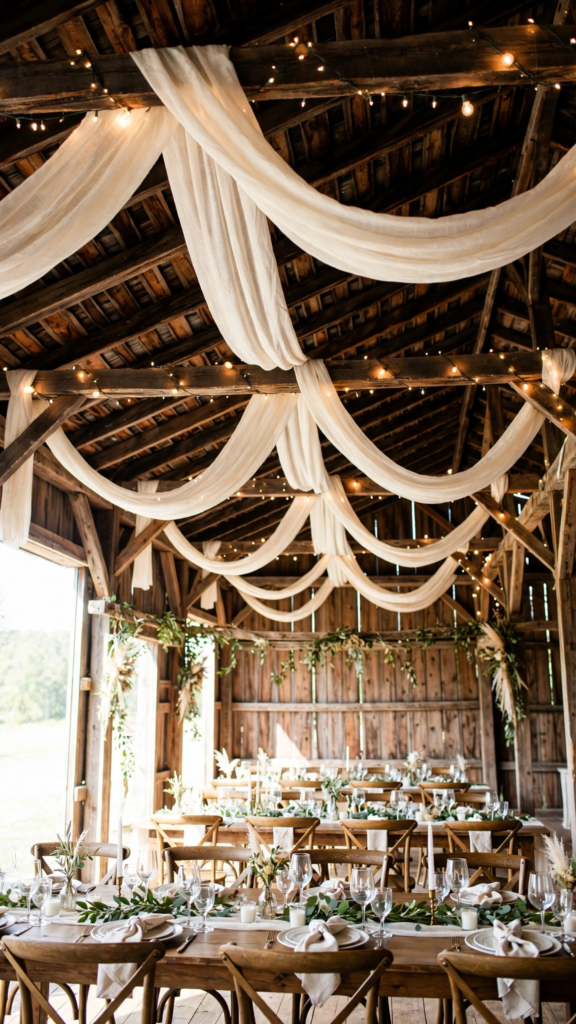
In a barn, do not hide the beams — dress between them. Ivory fabric looped beam to beam softens the hard lines while leaving the wood visible, striking the balance rustic couples want: polished, not precious. The beams double as rigging points, making this one of the easier installations, and string lights along the wood complete the picture. The style is a natural partner for the jewel-toned romance of an opal wedding theme, where soft fabric tempers deeper colors. Tip: measure beam spacing before buying fabric — barn beams are rarely even, and each bay may need a different panel length.
10. Draping with Suspended Florals Overhead
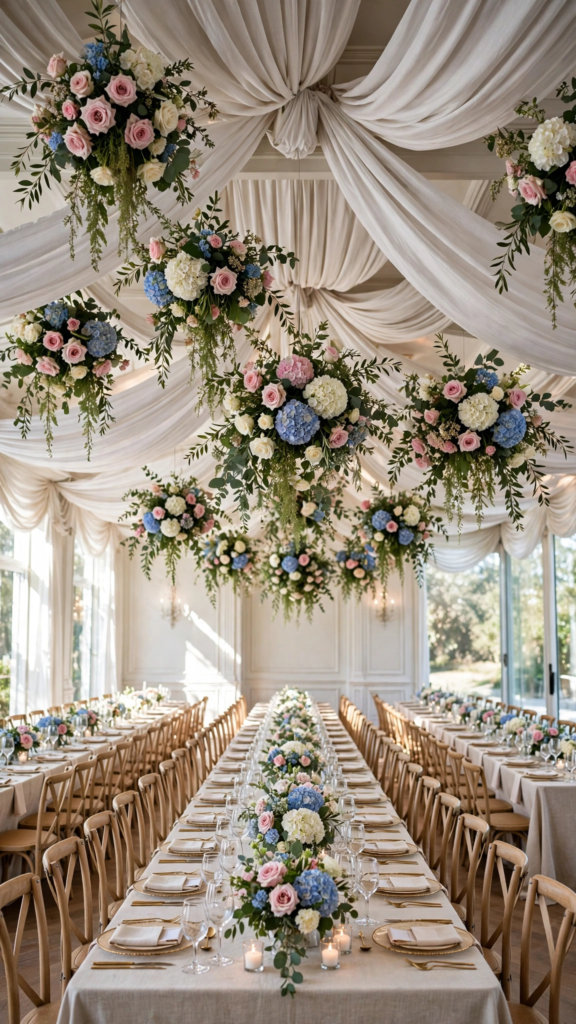
The most showstopping version of wedding ceiling draping adds flowers to the fabric itself — clusters of roses, hydrangeas and orchids suspended at the gathering points, or floral garlands running along the swags. Guests feel as though they are dining in a garden turned upside down, and the fragrance is unforgettable. Position the heaviest florals over the dance floor and head table rather than above guest tables — cheaper, and nobody dines under anything weighty. Most professionals recommend realistic faux flowers overhead, where nobody can touch them to check. Tip: secure everything to structure, never to the fabric alone — fabric stretches, and flowers are heavier than they look.
11. Minimalist Single-Sweep Draping
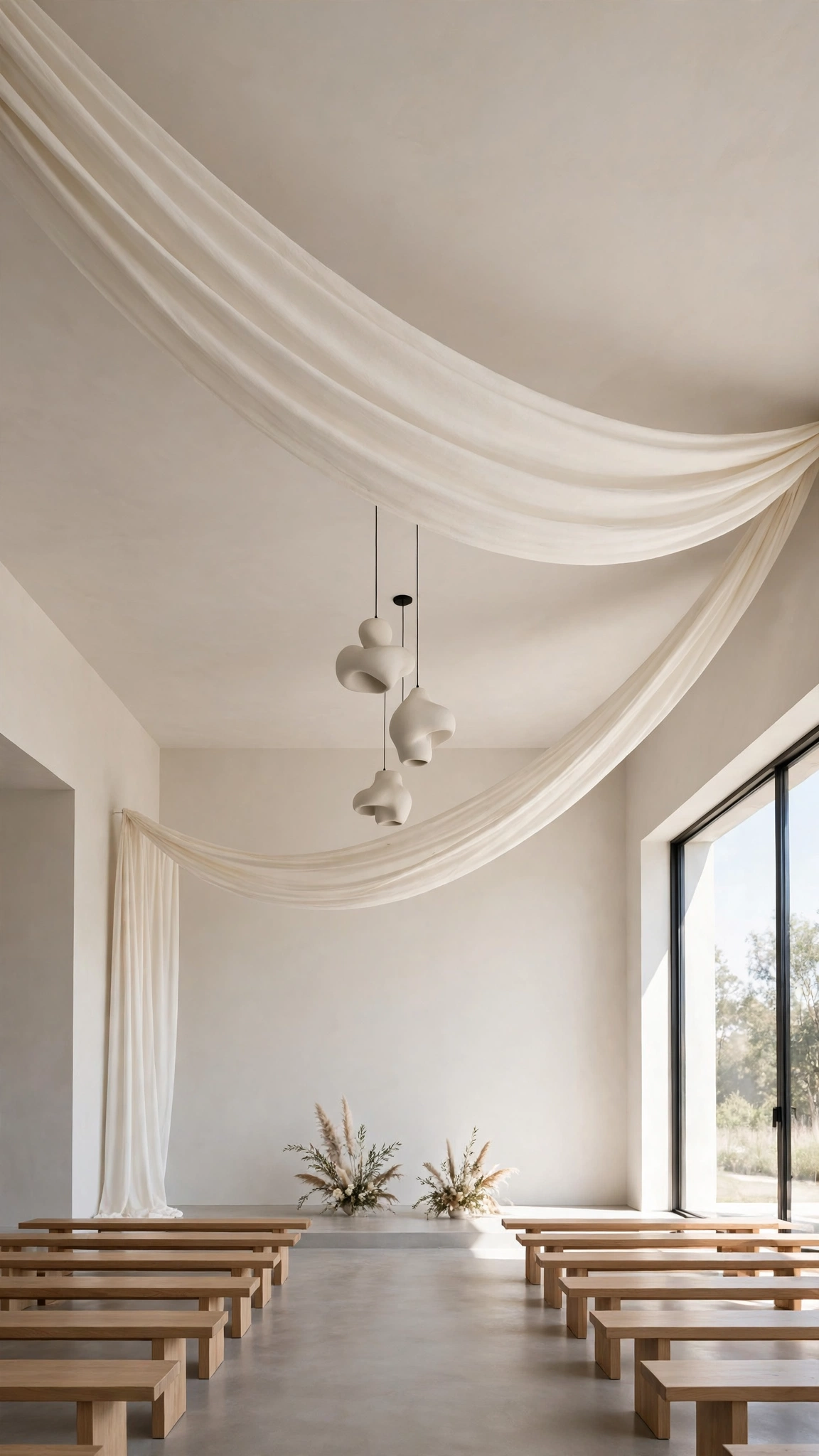
Modern couples are proving restraint can be the most elegant choice of all. Instead of a ceiling full of fabric, one or two wide panels sweep across the room in a single gesture — diagonally, or in parallel bands above the tables. The look is architectural and calm, leaving space for sculptural pendant lights. Minimal draping also suits the icy, pared-back palette of an ice blue winter wedding, where too much fabric would fight the crisp mood. Tip: with so little fabric, every wrinkle shows — steam panels after hanging and choose matte fabric that does not crease in transit.
Practical Tips Before You Commit to Ceiling Draping
A few unglamorous checks decide whether your draping looks like a magazine or a near-miss. Start with the venue contract: many halls restrict ceiling attachments, require fire-rated fabric, or insist on approved installers. Measure ceiling height honestly — in a room under nine feet, draping can feel oppressive and breach clearance above candles. Ask about rigging points, sprinklers and vents — fabric must never block airflow or safety equipment. Budget for installation and removal labour, which often costs more than the fabric, and visit at reception time of day — a ceiling glowing at noon may swallow light at seven.
Frequently Asked Questions
How much does wedding ceiling draping usually cost?
It varies enormously with room size and ambition. Fabric itself is modest — a DIY swag treatment for a small hall can come together for a few hundred dollars — while full professional ballroom installations with rigging, labour and removal commonly run into the thousands. Budget per linear foot plus an installation fee, and get two quotes using your venue’s exact measurements.
Can I hang ceiling draping myself?
For a small venue, a tent, or a single focal installation like the dance-floor circle, yes — with ladders, a helper and removable fixings, it is very achievable after a home trial run. For high ceilings, full canopies or anything near fixtures, hire professionals: height, weight and fire regulations are not worth improvising on your wedding day.
Which fabric is best for ceiling draping?
Chiffon and voile are the favourites: lightweight, soft-folding, and glowing when backlit. Chiffon has a slightly crinkled, matte texture that hides imperfections; voile is smoother and more translucent. Avoid satin or velvet overhead — they strain fixings and block light. Whatever you choose, confirm it is flame-retardant, as many venues require certification.
Will draping work in a venue with a low ceiling?
It can, with adjustments: shallow swags with minimal sag, flat panels rather than deep loops, and pale colors so the ceiling feels lifted rather than lowered. A single sweep or dance-floor circle works better in low rooms than a full canopy. Under eight feet, consider wall draping instead — the same softness without the clearance problems.
How far in advance should draping be installed?
Most installers need access two to four hours before guests arrive for a standard design, longer for canopies and florals. Build this into your venue hire window — the most commonly forgotten draping cost. Removal usually happens the same night, so confirm your hire covers the crew returning after the last dance.
Final Thoughts
A ceiling is too large a canvas to leave blank. From timeless chiffon swags to a single modern sweep of fabric, wedding ceiling draping lets you reshape your venue’s proportions, light and mood in a single decision — and make even a plain hall feel unmistakably yours. Choose the style that matches your space and budget, respect the practical checks, and enjoy the moment guests walk in and, without quite knowing why, look up and smile.