11 Circle Wedding Table Decor Ideas That Make Round Tables Feel Intentional
Round tables are the default at most receptions, which is exactly why they’re easy to decorate poorly. Without a long runner to anchor the eye the way a rectangular table has, a round table needs its centerpiece and smaller details to work a little harder, especially since guests are seated looking across at each other rather than down a single line of decor. Get the proportions right, though, and a round table can feel more intimate and conversation-friendly than any banquet-style setup.
These 11 circle wedding table decor ideas cover centerpieces, place settings, and the practical sightline issues that come up specifically with round tables.
A Low, Wide Centerpiece That Doesn’t Block Sightlines
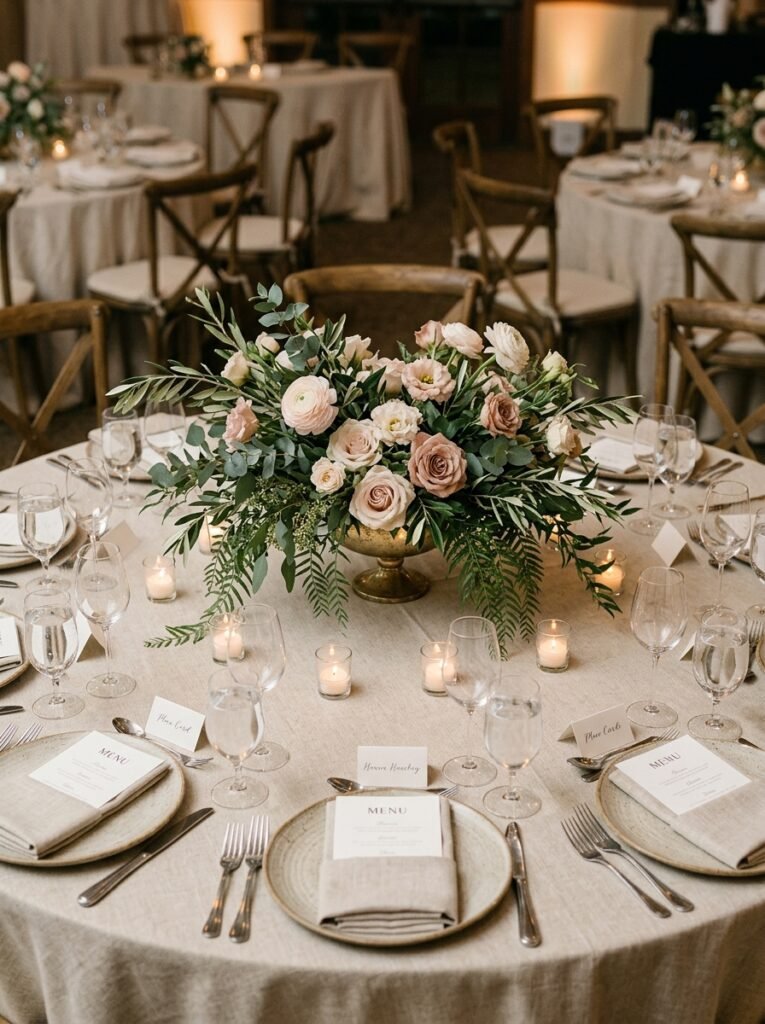
Because guests sit in a full circle around the table rather than along a single side, height becomes a bigger consideration than it is with long tables. A low, compact arrangement, wide rather than tall, keeps every guest able to see and talk to the people across from them without craning around flowers.
A general guideline is keeping any centerpiece under about 14 inches if guests will be seated on all sides, unless it’s built tall enough to see clearly underneath, like a raised arrangement on a slim stand. Round, loose arrangements in a low bowl or compote vase tend to suit the shape of the table better than a tightly structured, vertical design.
A Cluster of Varying-Height Candles and Bud Vases
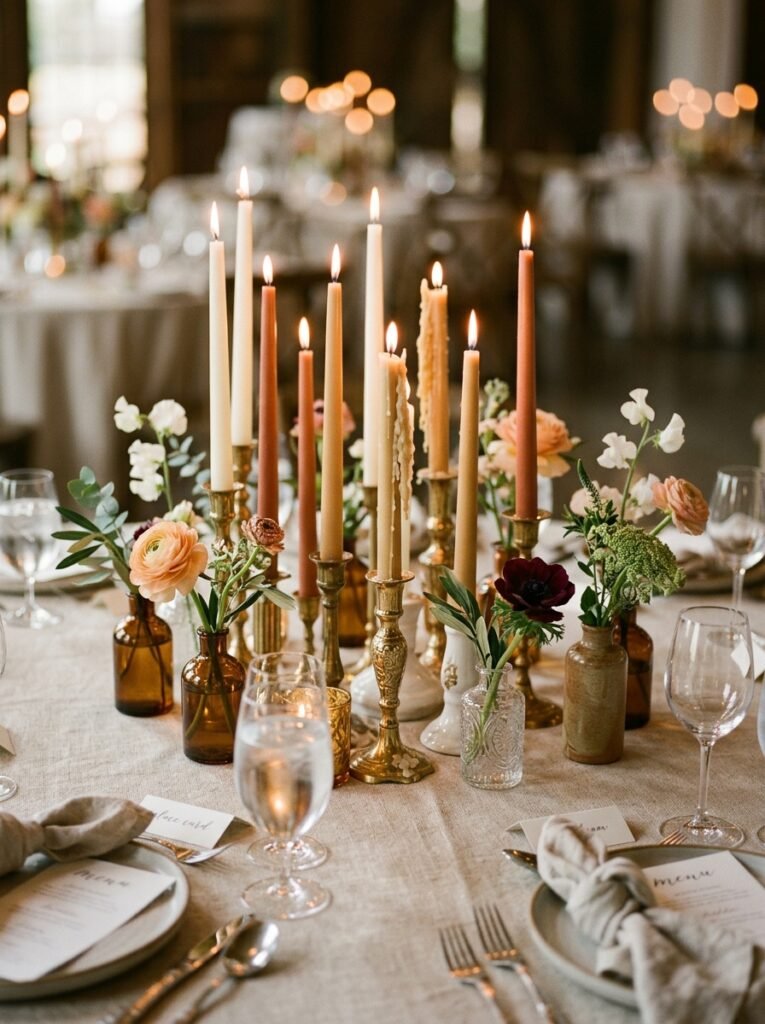
Instead of one large centerpiece, a cluster of mismatched candle heights and small bud vases with single stems scattered across the table gives a round table visual interest from every angle without creating a sightline obstacle. It also tends to look fuller for less cost than one large floral arrangement.
Vary the candle heights and bud vase sizes rather than using a uniform set, since too much symmetry can look stiff on a round surface where guests view it from all sides. Mixing in a few unlit decorative elements, like small stones, dried pods, or a scattering of petals, fills in the gaps between taller pieces.
A Round Mirror Base Beneath the Centerpiece
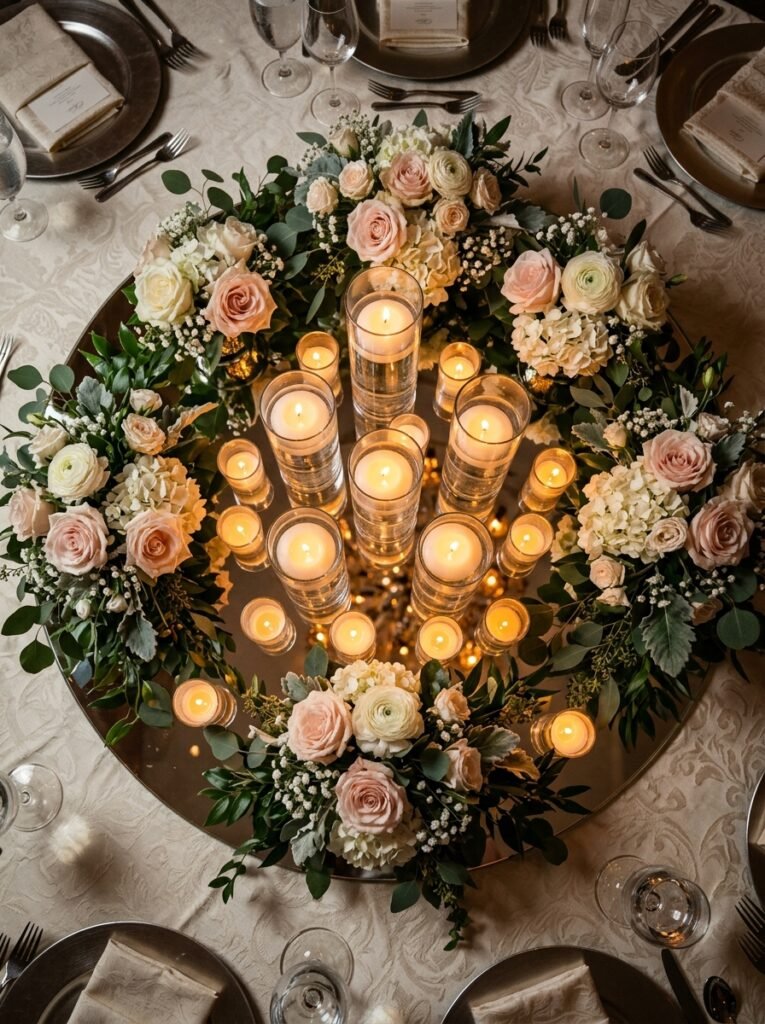
Placing the centerpiece on a round mirror, rather than directly on the linen, doubles the visual impact of candlelight and florals, since the reflection adds a sense of depth and sparkle that a flat tablecloth doesn’t provide. It also tends to photograph beautifully from directly above, a common angle for reception table shots.
Round mirrors echo the shape of the table itself, which gives the whole setup a more cohesive, intentional look than a rectangular mirror would on a circular surface. Keep the mirror simple with a thin or no frame, since a bulky frame can compete with the centerpiece rather than support it.
A Charger Plate as the Table’s Visual Anchor
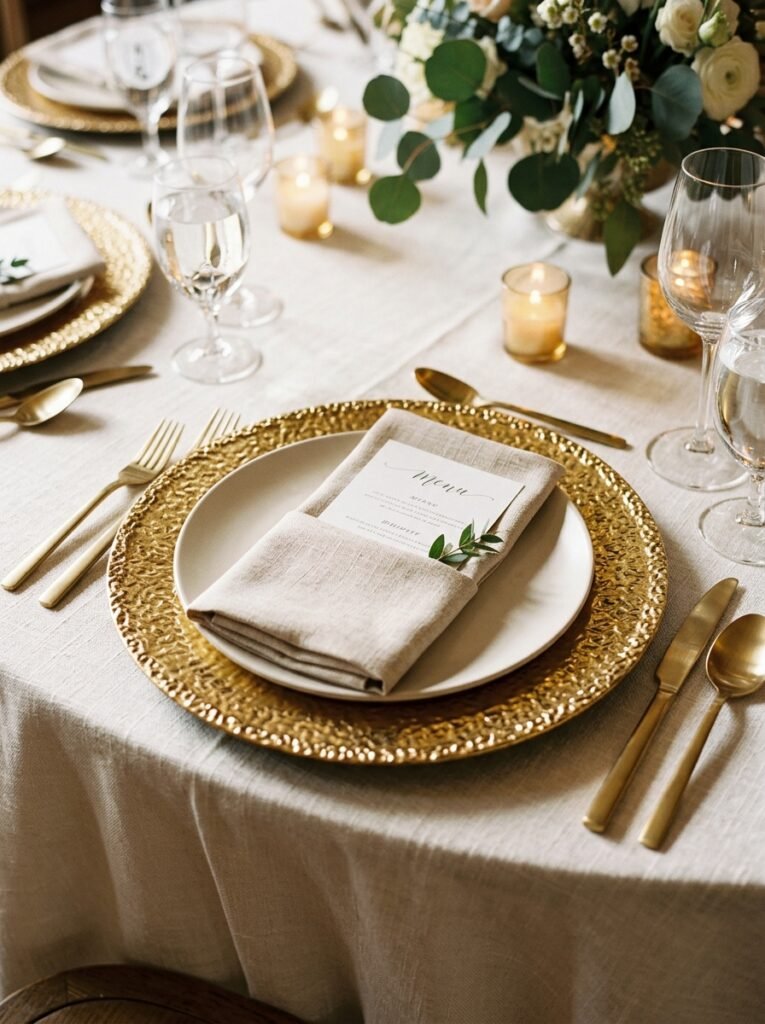
On a round table, each place setting is its own small focal point, and a charger plate in gold, a textured ceramic, or a deep jewel tone gives every seat a consistent visual anchor that ties back to the table’s overall theme. It’s a detail guests notice even when they’re not consciously looking for decor.
Textured chargers, like a hammered metal finish or a woven rattan style, tend to photograph with more depth than a flat, glossy charger, especially under warmer reception lighting. If budget allows for only one upgraded element per place setting, the charger plate is often the one with the most visible return, since it sits directly in front of every guest.
A Printed or Hand-Lettered Table Number on a Stand
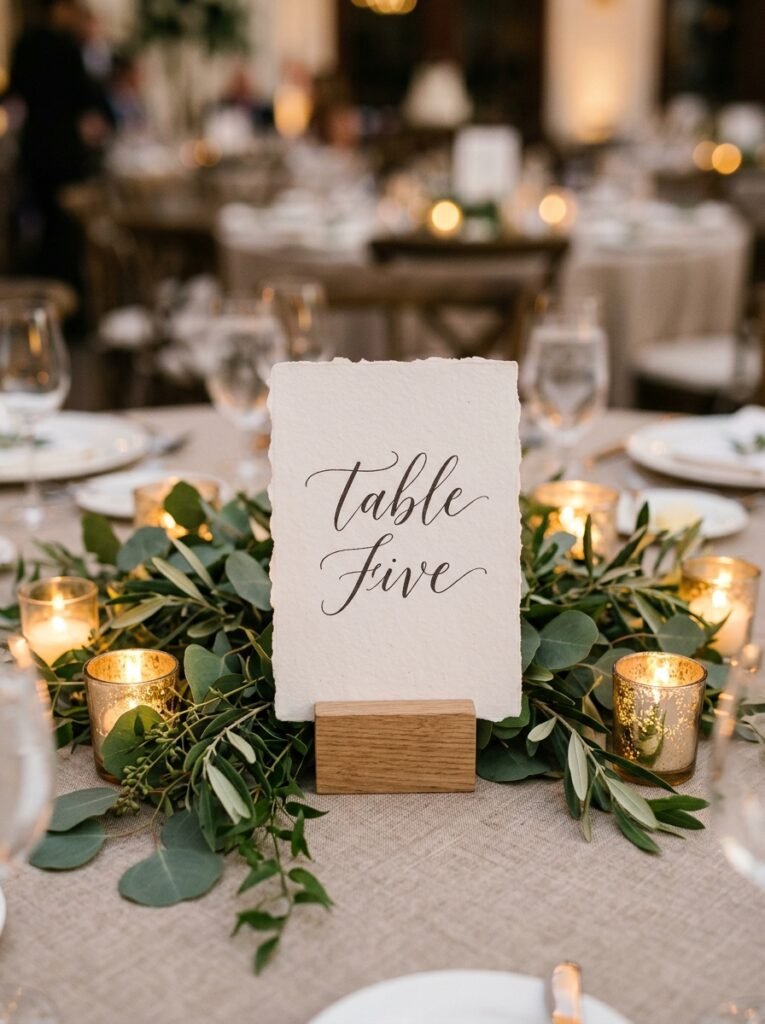
A table number designed to stand upright in the center or just off to one side, rather than lying flat, helps guests locate their seat more easily across a room full of round tables that can otherwise look fairly similar to one another. Acrylic, wood, or simple cardstock in a stand all work depending on your overall style.
Keep the font large enough to read from a distance, since a beautifully designed number that’s too small or too delicate defeats its own purpose. Tying the table number’s material or color to the rest of the tablescape, gold on gold, or wood tones matching a rustic theme, makes it feel like part of the design rather than a purely functional add-on.
A Circular Arrangement of Mixed Linens
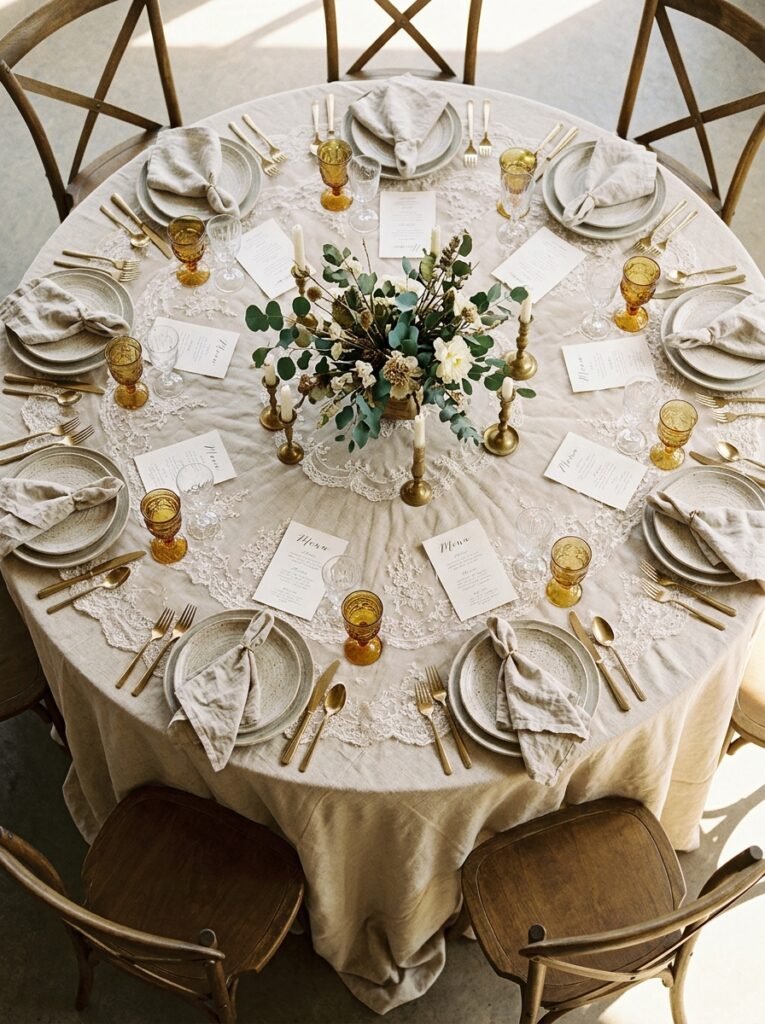
Layering a round tablecloth with a contrasting circular overlay, like a sheer lace topper over a solid base, adds texture and dimension without requiring any additional centerpiece elements. It works particularly well for tables where the florals are kept deliberately minimal.
This is a relatively affordable way to elevate a table, since most rental companies carry overlay options in a range of textures and colors. Choosing an overlay with some pattern or texture, rather than a plain color repeated from the base linen, gives the layering actual visual purpose rather than just adding fabric for its own sake.
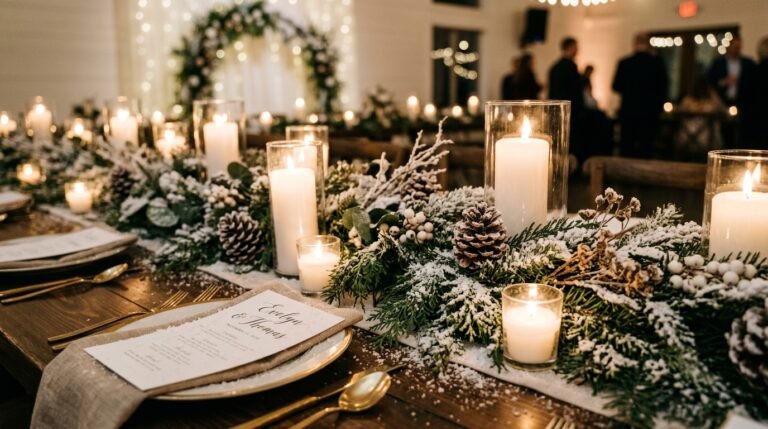
A Garland Draped in a Loose Circle Around the Centerpiece
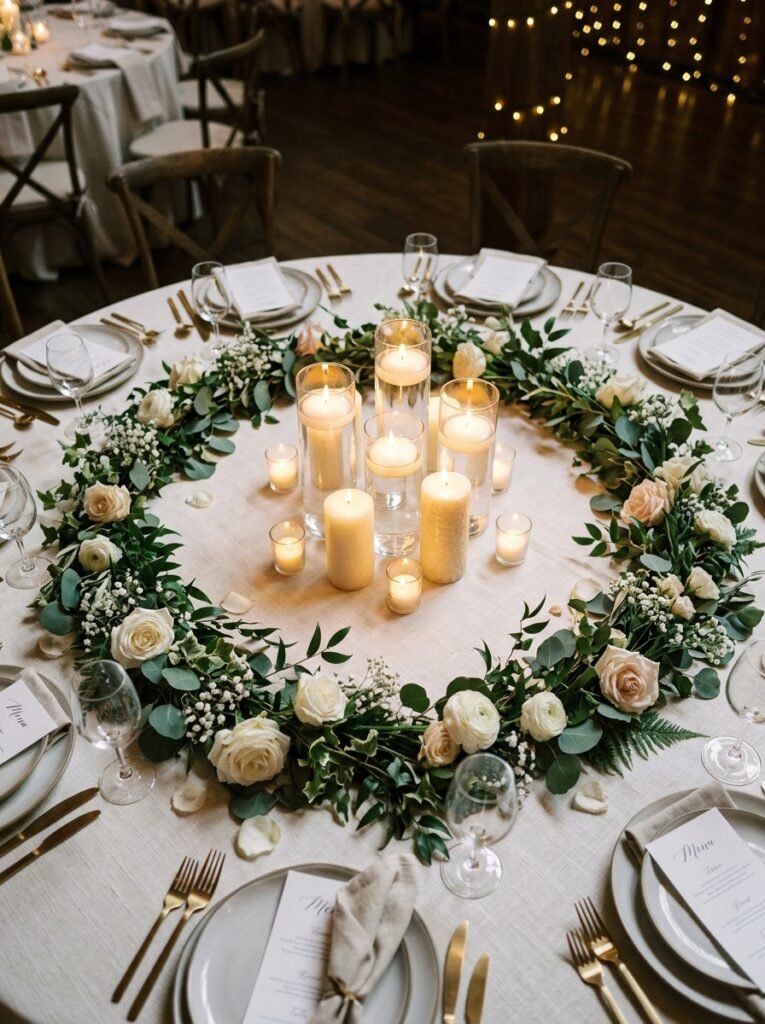
Rather than a runner, which naturally suits a rectangular shape, a loose greenery or floral garland arranged in a soft circle around the base of the centerpiece echoes the round shape of the table itself. It reads as more intentional than greenery simply scattered across the surface.
This detail works especially well combined with a cluster of candles, since the garland provides a continuous visual line connecting the separate elements. Fresh greenery will wilt over a long reception, so confirm with your florist how it’s holding up by the time of cocktail hour versus dinner service, particularly in a warm room.
Place Cards Arranged in a Circular Pattern
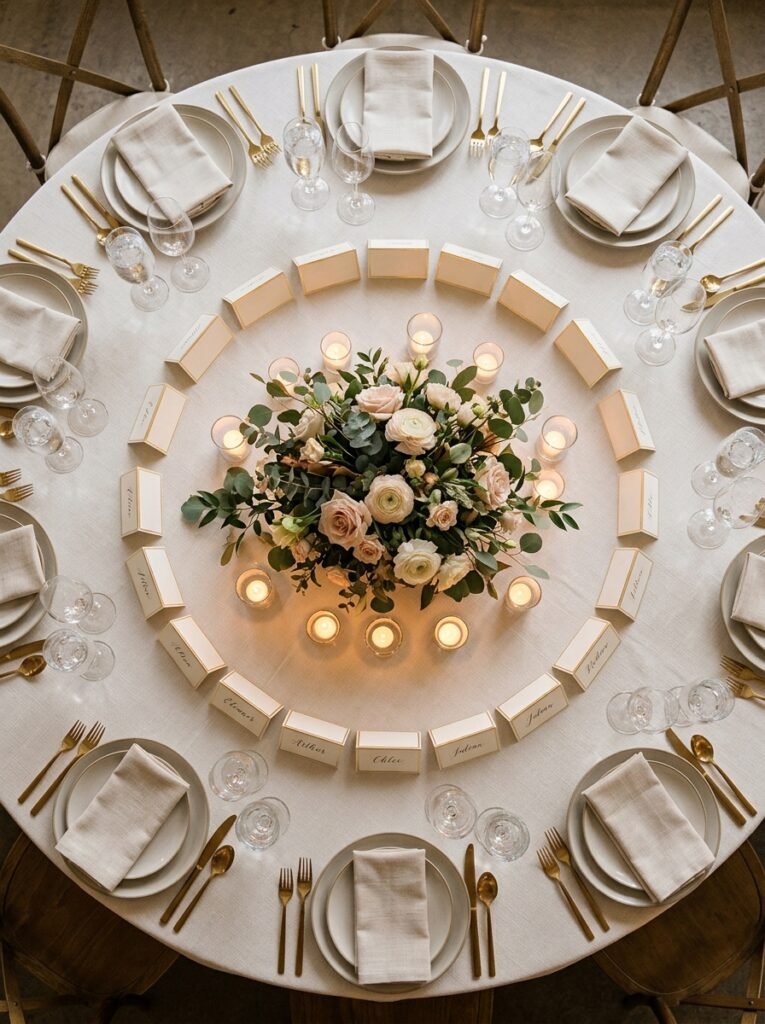
Instead of lining place cards up in a straight row, as you might on a long table, arranging them in a gentle curve or full circle around the centerpiece follows the natural shape of a round table and makes each card equally accessible no matter which side guests approach from.
This is a small detail, but it solves a real logistical issue, since place cards lined up straight on a round table often end up closer to some seats than others, leading guests to hunt for their name. A circular arrangement keeps the spacing even and makes the table easier to navigate during a busy reception entrance.
Confetti or Petals Scattered in a Ring
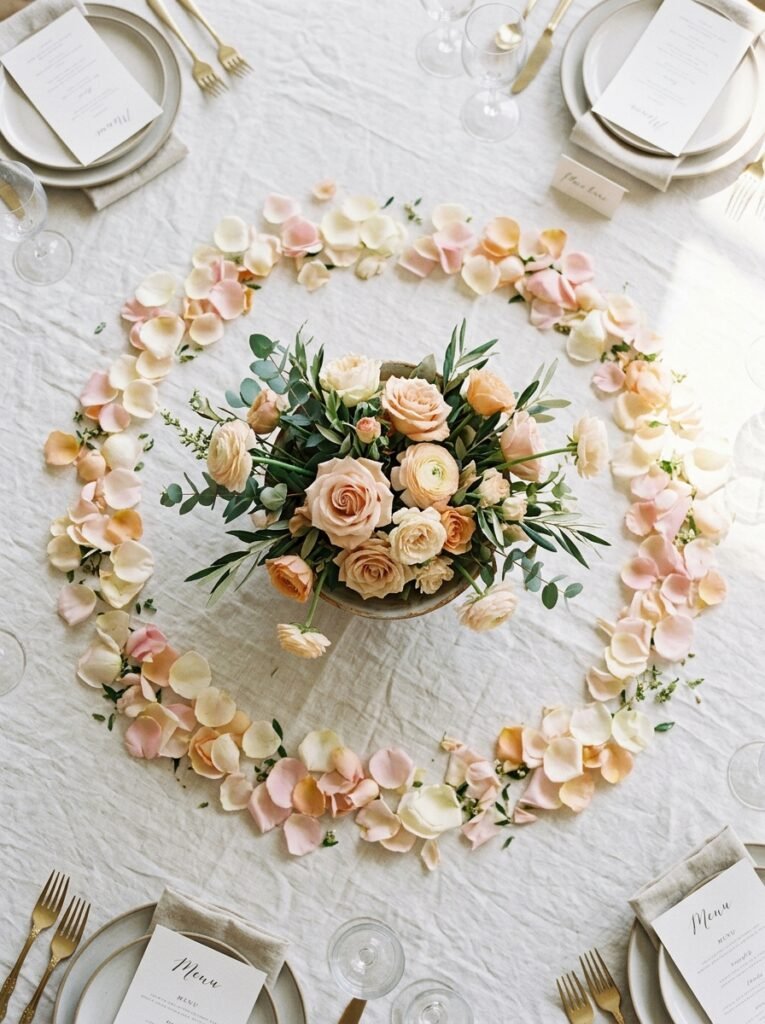
A light scattering of petals, confetti, or small dried botanicals arranged in a loose ring around the centerpiece, rather than spread randomly across the whole table, adds color and texture while keeping the design from feeling cluttered. It also draws the eye naturally toward the center of the table.
Use biodegradable or fabric petals if the venue has rules about natural confetti, and check with your venue about cleanup expectations either way, since scattered petals and confetti take more time to clear than a simple runner or vase. A light scattering goes further than it looks like it will in photos, so it’s easy to overdo this detail if you’re not careful with quantity.
A Floating Candle Bowl as the Centerpiece
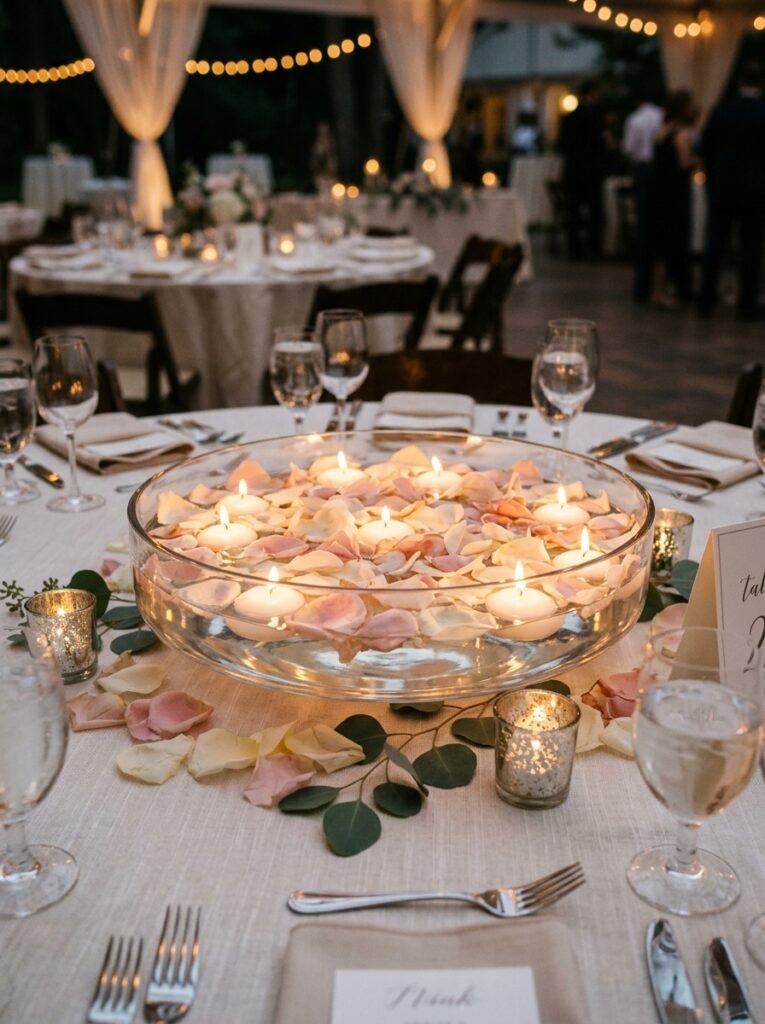
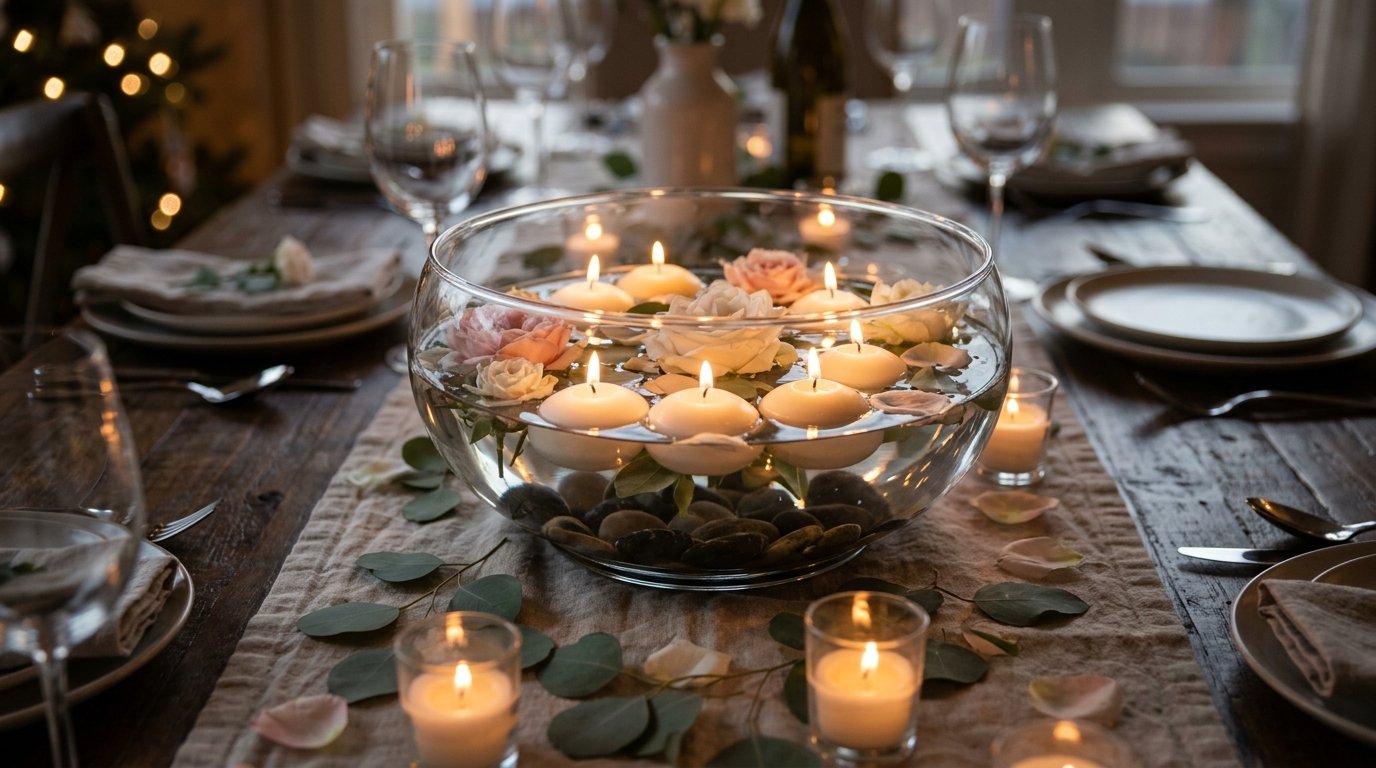
A wide, shallow glass bowl filled with water, floating candles, and a few loose petals or greenery sprigs creates a soft, glowing focal point that sits low enough to preserve sightlines across the table. It’s a particularly good option for evening receptions where ambient lighting matters as much as the visual design.
Floating candles need refreshing throughout a long event, since they burn down and can tip if the water level changes, so confirm with your venue or day-of coordinator whether staff will be checking and relighting them periodically. This centerpiece also tends to be more affordable than a full floral arrangement, since it relies more on candlelight and water than on flowers.
Coordinated Napkin Folds and Ring Details
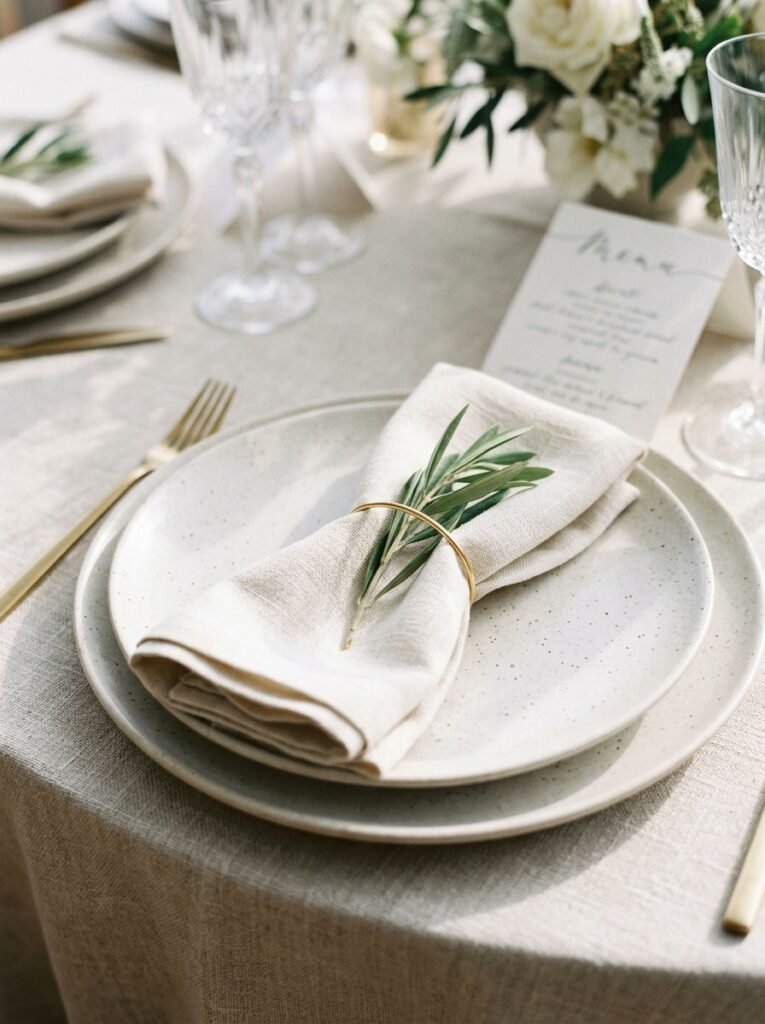
A simple napkin fold, paired with a napkin ring in a coordinating color or texture, gives a round table a polished, cohesive look at every place setting without requiring a large floral budget. A thin gold ring, a sprig of greenery tucked into a fold, or a small wax seal detail all work depending on your overall theme.
This is one of the lowest-cost ways to add a decorative detail to every single seat at the table, since napkin rings are relatively inexpensive to rent or buy in bulk. Keep the fold simple rather than elaborate, since an overly complex fold can look stiff and formal in a way that doesn’t always suit the rest of a more relaxed tablescape.
Designing a Table That Works From Every Angle
The biggest difference between decorating a round table and a long one is that every element needs to work from all sides, not just one. Keep centerpieces low enough to see across, and favor circular or clustered arrangements over anything with an obvious “front,” since round tables don’t really have one.
If you’re working with a tight budget, prioritize the centerpiece and charger plates, since those are the two elements guests notice first and most consistently throughout the meal. Smaller details, like napkin rings or scattered petals, are easy to add later without much cost and can round out the design once the bigger decisions are settled.