11 Half Up Half Down Wedding Hairstyles That Actually Hold Up All Day
Half up half down is one of the most requested wedding hairstyles for a reason: it gives you the romance of loose, flowing hair with enough structure to keep it out of your face during vows, dancing, and every hug from a relative you haven’t seen in years. It also tends to suit more face shapes and hair types than a full updo or hair worn entirely down, which is part of why it stays popular across so many wedding styles.
The tricky part is that “half up half down” covers a lot of ground, from a soft twist with loose waves to a fully braided crown. Below are 11 variations worth bringing to your hairstylist, along with notes on hair type, veil placement, and what tends to hold up best through a full day of photos and dancing.
The Classic Twisted Half Up
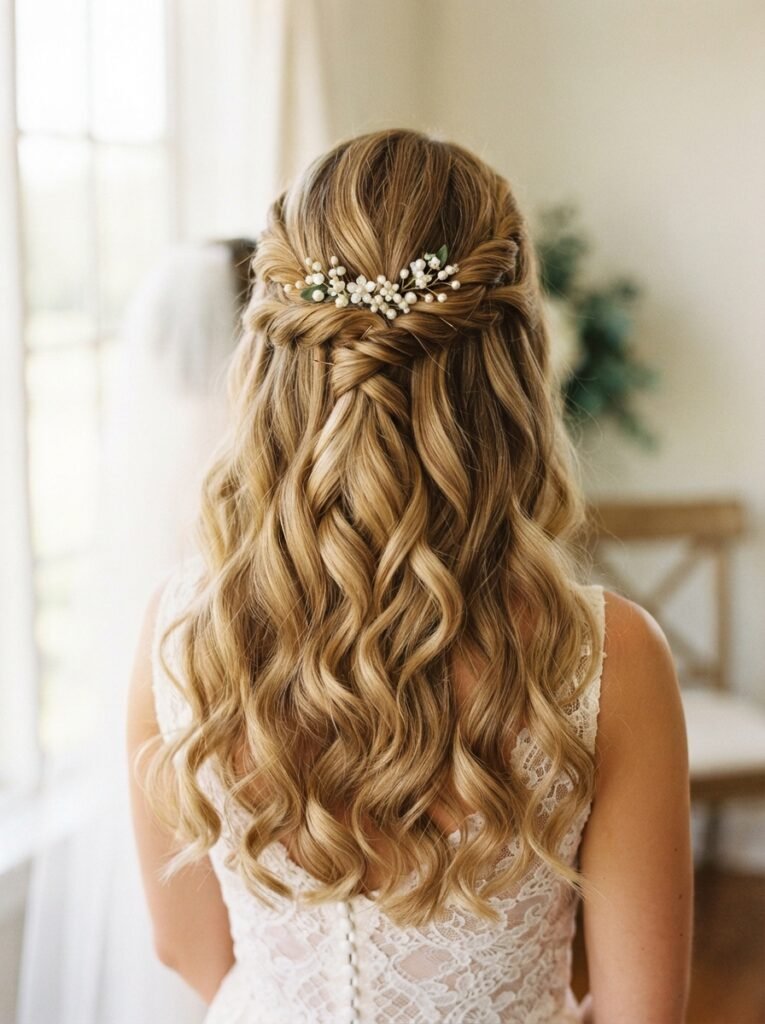
Two small sections from either side of the head are twisted back and pinned together at the crown, with the rest of the hair left down in loose waves. It’s simple, doesn’t require much length, and works on almost any hair texture.
This style is a good starting point if you’re not sure what you want yet, since it’s easy for a stylist to adjust: tighter twists for a more polished look, looser ones for something undone and casual. It also holds up well through a long reception, since the twist itself takes most of the pinning weight rather than relying on a single point of tension.
Braided Crown with Loose Waves

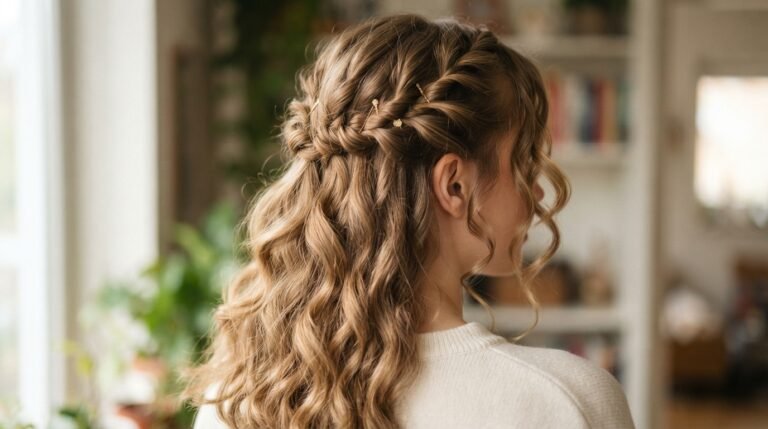
A thin braid, or two braids woven from each temple, wraps around the back of the head like a soft crown, while the rest of the hair falls in waves. It reads as romantic and slightly bohemian, and it photographs beautifully from behind, which matters more than people expect for a wedding.
Fine hair can struggle to hold a visible braid texture, so ask your stylist about teasing the braid slightly or using a texturizing spray beforehand. If you’re wearing a veil, this style usually needs the veil anchored just beneath the braid rather than on top of it, so the braid stays visible in photos before the veil comes off.
Half Up with a Low, Loose Bun

Instead of leaving the bottom half down, the lower section is gathered into a soft, low bun while the top half stays structured with a twist or braid. It’s a good middle ground for anyone who wants an updo’s tidiness without fully committing to one.
This version tends to hold up especially well for long receptions and dancing, since less hair is left loose to tangle or frizz. It also suits finer hair, since a bun can be built up with padding or a small hair donut to add volume that loose waves alone might not give.
Half Up with Fresh Flowers

Small sprigs of baby’s breath, eucalyptus, or a couple of delicate blooms tucked into a twisted or braided half up section add a soft, garden-party feel without the commitment of a full floral crown. It works particularly well for outdoor or rustic weddings.
Talk to your florist about which flowers hold up outside of water for several hours, since some wilt quickly once cut. Smaller, sturdier blooms like spray roses or waxflower tend to last better than anything delicate. Ask your stylist to place them so they won’t catch on a veil or shift during a first dance.
Voluminous Half Up with Deep Waves
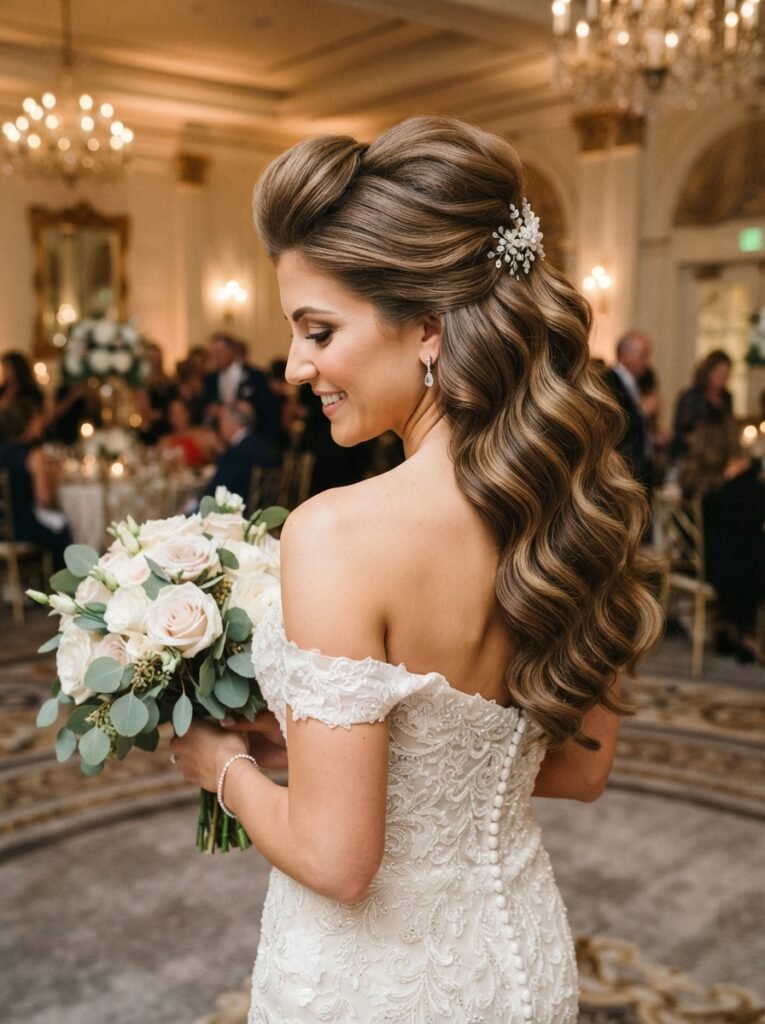
For a more glamorous, old-Hollywood feel, the top section is smoothed and lifted for volume at the crown, and the rest of the hair is styled in deep, defined waves rather than a looser beachy texture. It suits ballroom or formal venues and pairs well with a more structured gown.
Volume at the crown needs backcombing or a volumizing product, and it’s worth discussing with your stylist how it should look in photos taken from above, such as during a first kiss or a shot from a balcony. This style also tends to need touch-ups later in the night, since the waves can loosen, so ask if your stylist or a bridesmaid can carry a small travel iron for quick fixes.
Half Up with a Statement Hair Clip or Comb
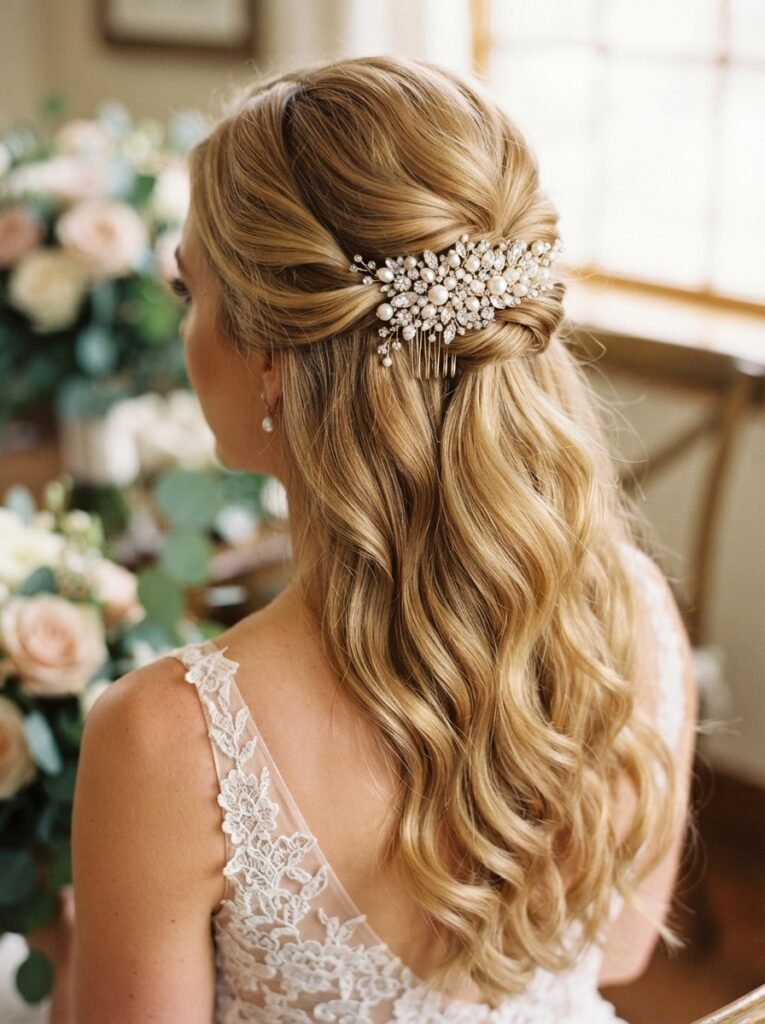
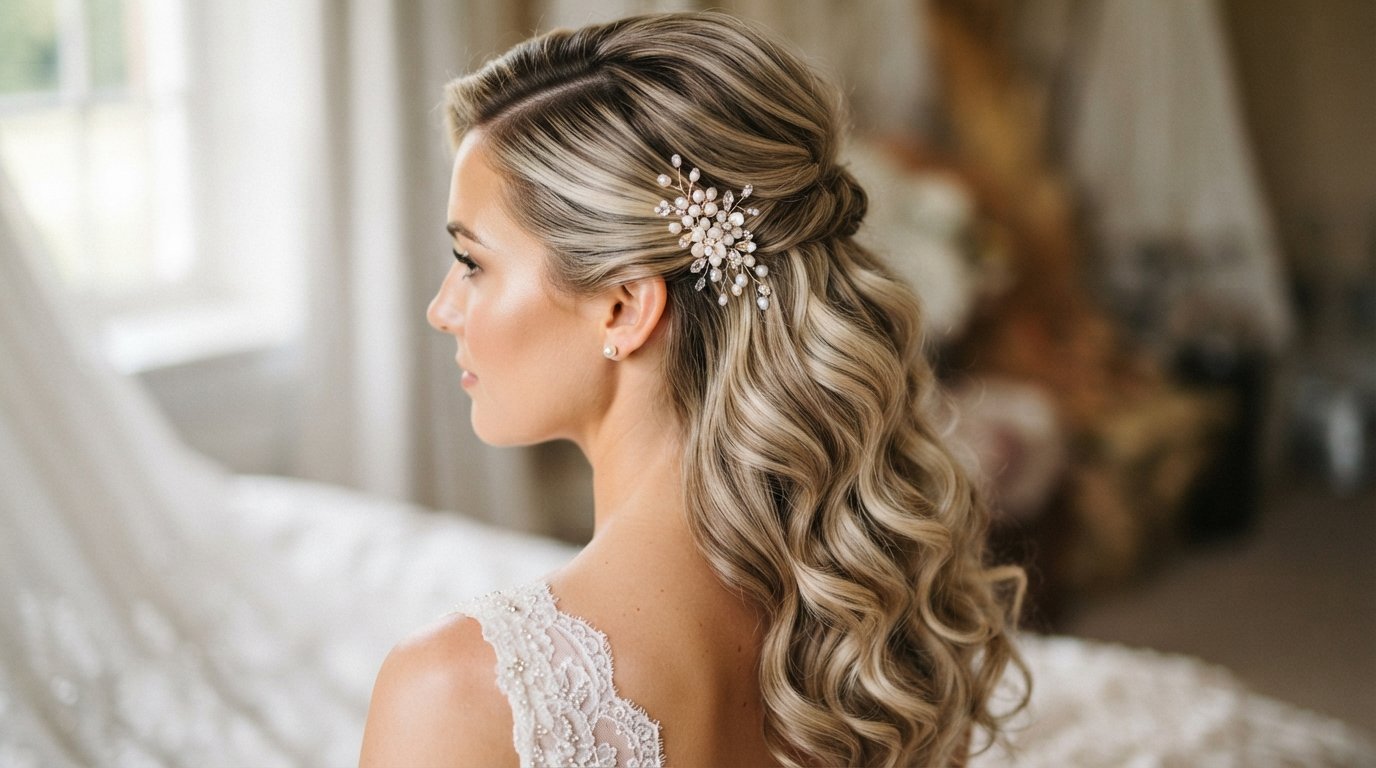
A simple half up twist or braid becomes something else entirely with a pearl, crystal, or vintage-inspired clip placed at the pinning point. It’s an easy way to add a little sparkle or personality without full florals or heavy accessories.
This is a good option if you’re wearing a family heirloom piece, since it gives the accessory a clear place to sit rather than getting lost in a full updo. Bring the actual clip or comb to your hair trial, since sizing and placement can look very different in person than in a product photo.
Textured Half Up for Fine, Straight Hair
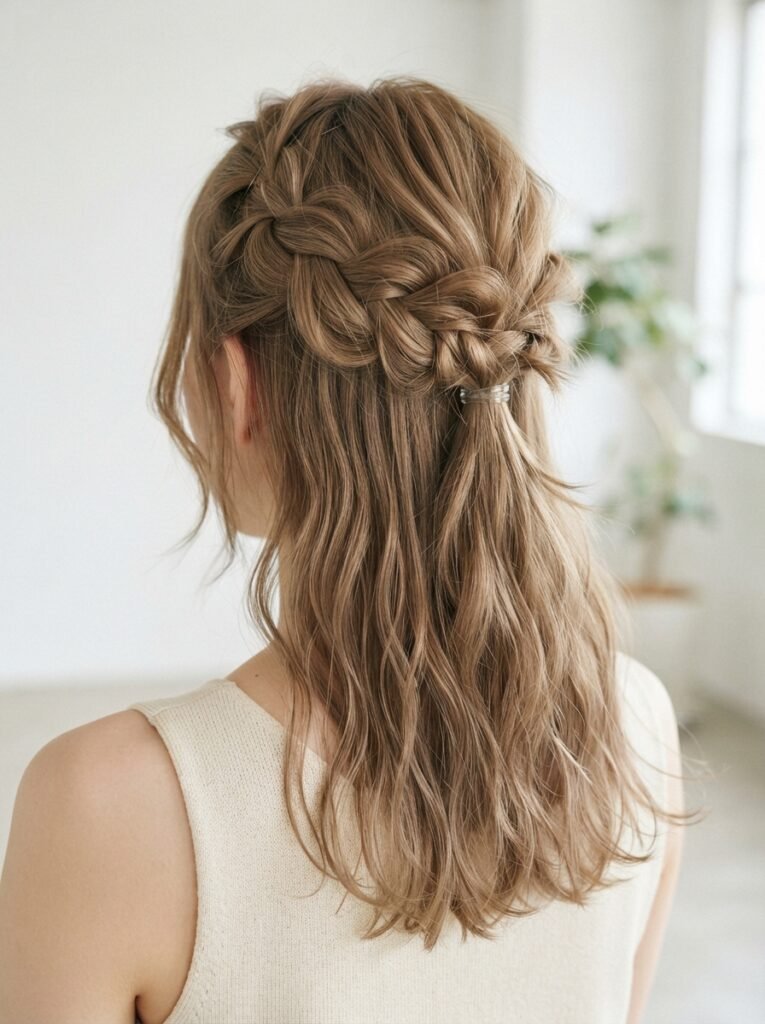
Fine, straight hair often struggles to hold a half up style through the day, since there’s less texture for pins to grip. A loose braid or twist combined with a light texturizing spray and soft waves throughout gives the hair something to hold onto, and a few bobby pins hidden underneath add security without adding bulk on top.
Ask your stylist about a lightweight setting spray rather than a heavy-hold one, since fine hair can end up looking stiff or flat with too much product. A slightly undone, piece-y finish often looks more natural on fine hair than a perfectly smooth one.
Half Up for Curly or Coily Hair
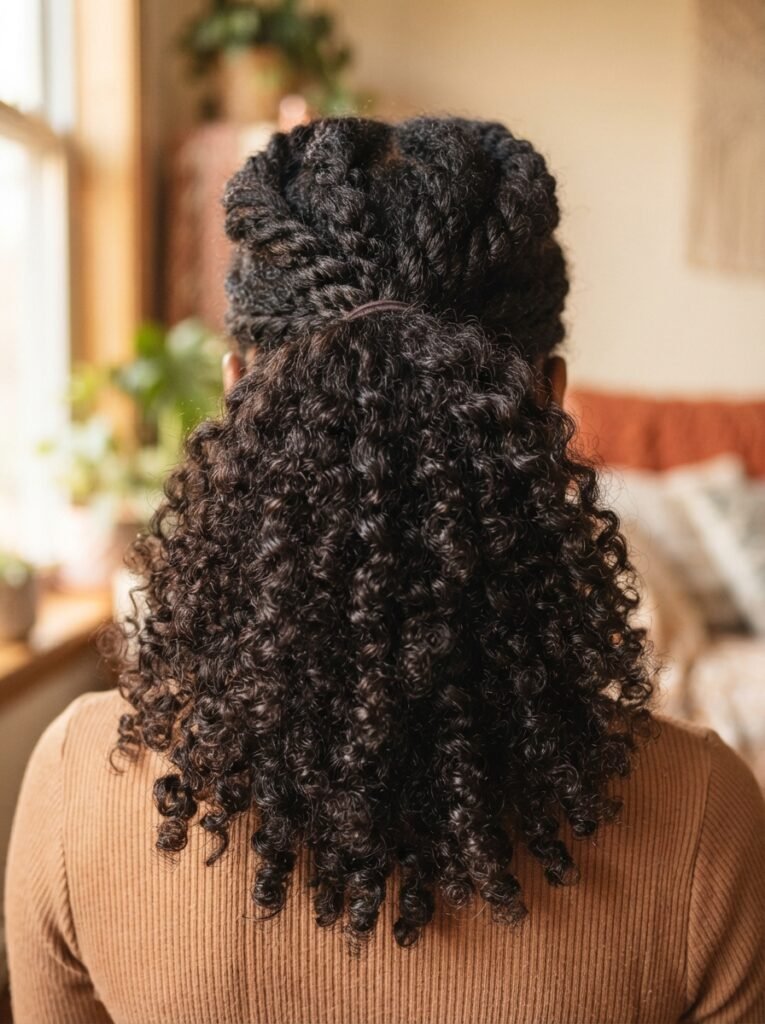
Curly and coily hair often needs less added texture and more structure to keep curls defined and frizz-free through the day. A twist-out or two-strand twist pattern at the crown, pulled back and secured, lets natural curl pattern shine in the lower half rather than fighting it into waves.
Work with a stylist experienced with your hair type specifically, since curl patterns respond very differently to humidity, product, and heat than straight or wavy hair. Ask about anti-humidity products if your venue is outdoors or in a warm climate, and consider a trial run close to your actual wedding date rather than months ahead, since curl behavior can shift with the season.
Half Up with a Deep Side Part
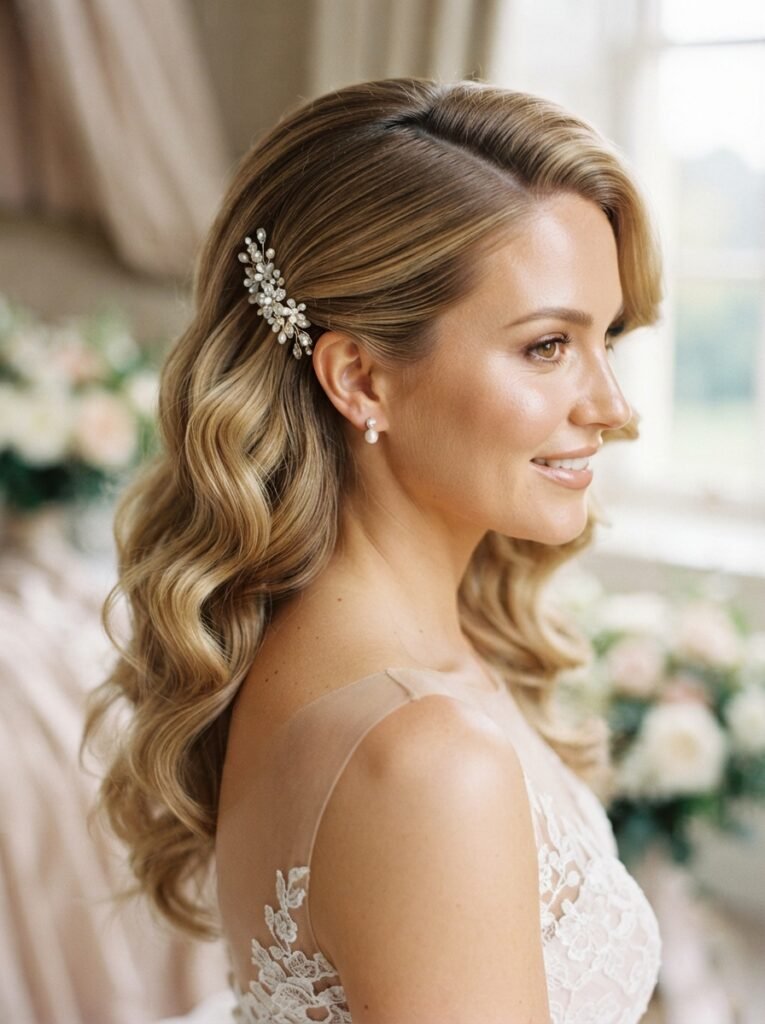
Moving the part from center to a deep side changes the whole feel of a half up style, adding a slight drama and asymmetry that suits more editorial or fashion-forward wedding looks. It also tends to flatter rounder face shapes by adding visual length.
This style photographs differently depending on which side the veil and jewelry sit, so plan the part direction around your earrings and veil placement in advance. A deep side part can also shift throughout the day, so ask your stylist to set it with a strong-hold product at the root.
Half Up with a Low Braid Instead of Waves

Rather than leaving the lower half loose, it’s gathered into a single loose braid that trails down the back or over one shoulder. It reads as a little more polished and controlled than fully loose waves, while still keeping the relaxed feel of a half up style.
This version is particularly practical for windy outdoor venues or long dance sessions, since a braid stays tidier than loose hair over several hours. A slightly messy, pulled-apart braid tends to look more intentional and less severe than one that’s tightly plaited.
Half Up with a Veil Built Into the Style

Rather than clipping a veil on as an afterthought, some stylists build the half up section specifically around where the veil will sit, so it stays anchored through the ceremony and lifts away cleanly for the reception. This is worth discussing at your trial rather than your wedding morning.
Bring your actual veil, or a close approximation, to the trial so your stylist can practice placement and removal. Ask specifically how the style will look with the veil on, during the ceremony, and off, during the reception, since these are effectively two different hairstyles built around the same base.
Choosing the Right Half Up Style for You
Think about your hair type first, since it narrows the list quickly. Fine hair usually does better with a bun or braid for structure, curly hair often looks best working with its natural texture rather than against it, and thick hair has the most flexibility to try almost any version on this list.
Bring photos to your trial, but stay open to adjustments, since a style that looks one way on someone else’s hair texture may need to be built differently on yours. And always test the finished look under the lighting you’ll actually be photographed in, since a hairstyle that looks perfect in a bright salon can read very differently in the softer, dimmer light of an evening reception.