11 Low Cost Wedding Decor Ideas That Still Look Thoughtfully Done
Budget decor has a reputation problem. Say “low cost wedding decor” and a lot of people picture plastic tablecloths and dollar-store banners, but the actual gap between an expensive-looking reception and an affordable one usually comes down to a handful of choices, not the total amount spent. Good lighting, a cohesive color story, and a few well-placed details go further than scattering decorations across every surface.
These 11 low cost wedding decor ideas focus on where to spend a little and where to skip spending almost entirely, without the result looking like it was done on a shoestring.
Lean on Candlelight Instead of Floral Volume
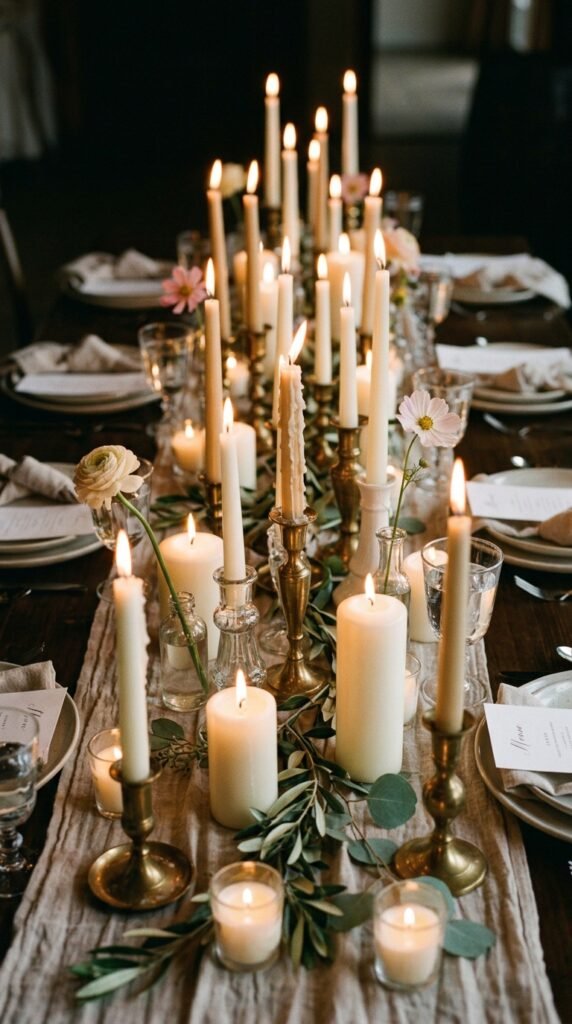
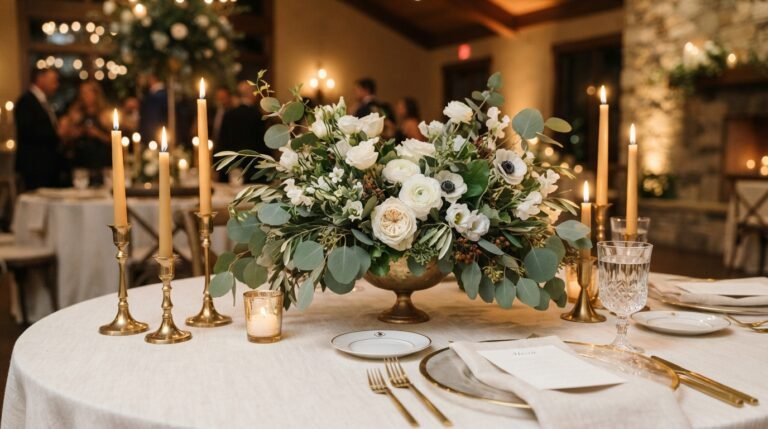
Candles are one of the cheapest ways to transform a room, and they do a disproportionate amount of visual work for the cost. A cluster of varying-height candles down a table, paired with just a few flowers rather than a full centerpiece, gives the illusion of a much fuller, more elegant setup than flowers alone at the same budget.
Buy unscented taper and pillar candles in bulk rather than from specialty wedding retailers, since the markup on anything labeled “wedding” is often significant for an identical product. If your venue doesn’t allow open flame, battery-operated candles with a genuine flicker effect have improved a lot and read as real from a short distance, which is usually far enough for guests seated at a table.
Rent or Borrow Instead of Buying New
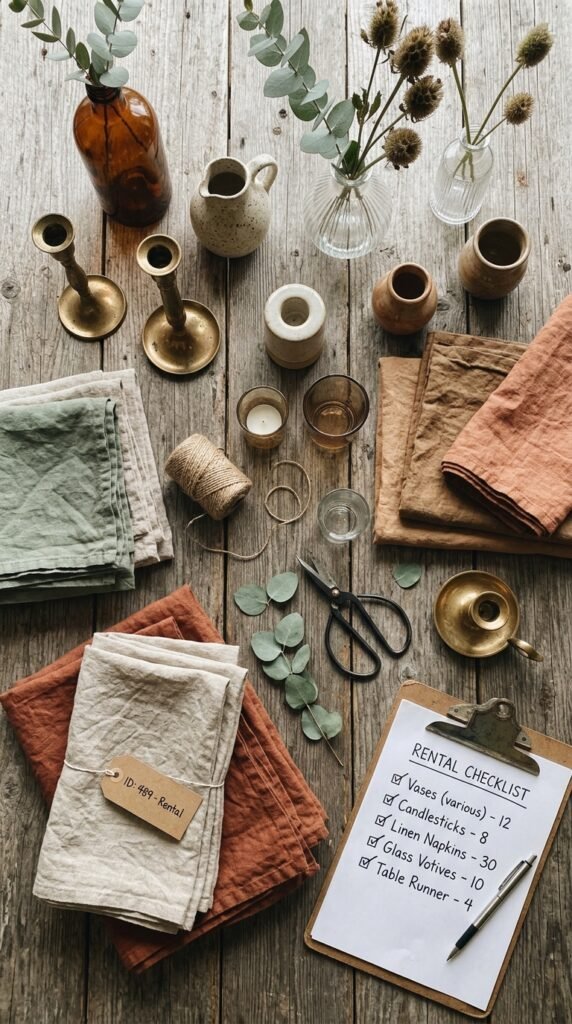
Linens, vases, arches, and even some lighting equipment are almost always cheaper to rent than to buy outright, especially for items you’ll only use once. Local rental companies, especially ones that aren’t marketed specifically toward weddings, often have lower prices than those that specialize in bridal events.
Ask family and friends who’ve hosted parties or events recently if they have decor items sitting unused, since many people are happy to lend things like mason jars, lanterns, or extra linens rather than see them collect dust in storage. Facebook Marketplace and local buy-nothing groups are also worth checking before buying anything new, since other couples frequently sell their decor after their own wedding.
Use Greenery Instead of Flowers Wherever Possible
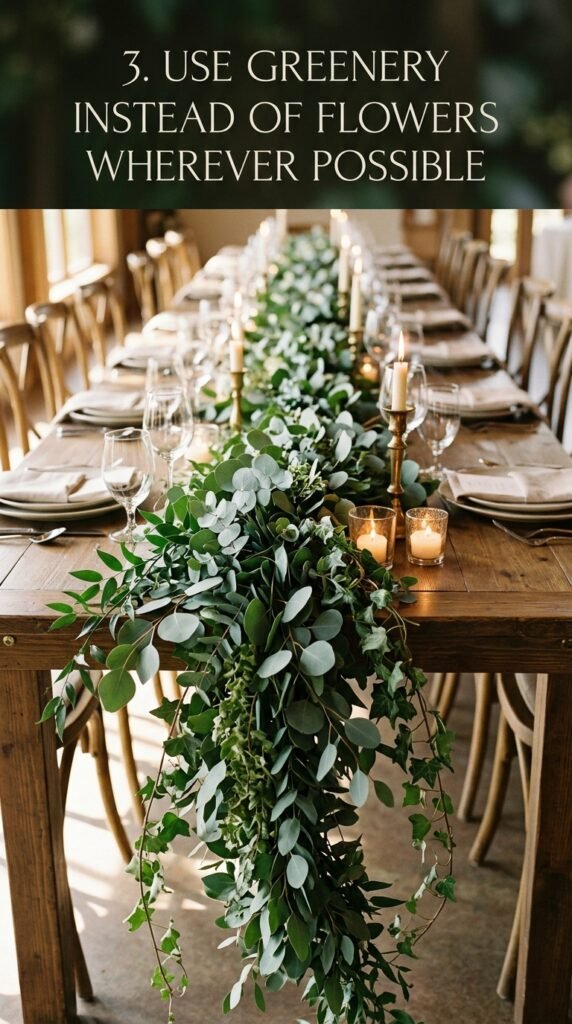
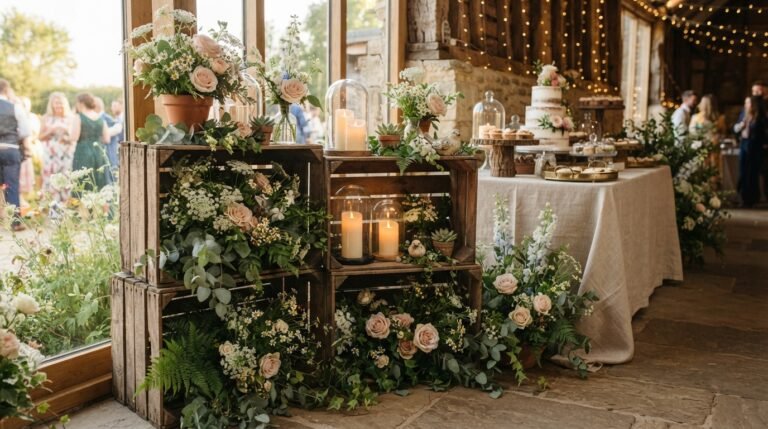
Greenery is almost always cheaper than flowers by volume, and it lasts longer without wilting, which means it can often be sourced further in advance. A table runner of eucalyptus, trailing ivy on an arch, or a simple garland draped along a mantel gives a lush, full look without the per-stem cost of florals.
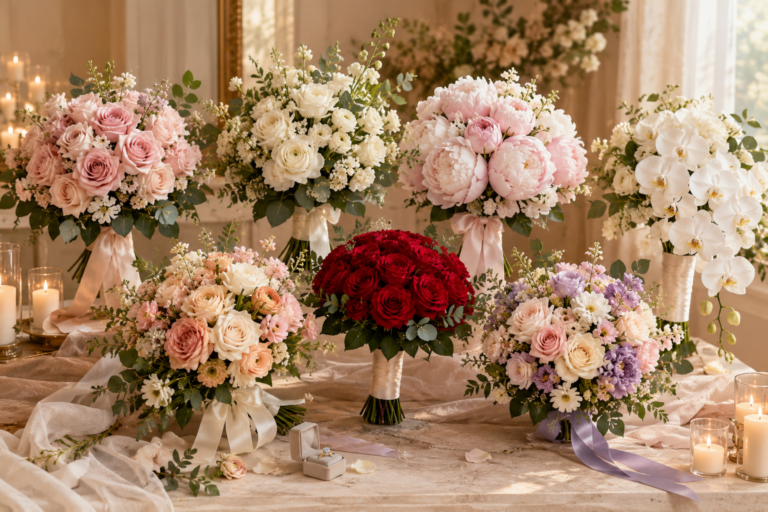
Reserve your flower budget for a few high-impact spots, the bouquet, a small cluster on the cake, maybe the head table, and let greenery carry the rest of the room. Some grocery stores and wholesale florists sell greenery by the bunch at a fraction of what a dedicated wedding florist charges for the same material.
DIY Paper Goods Instead of Custom Printing
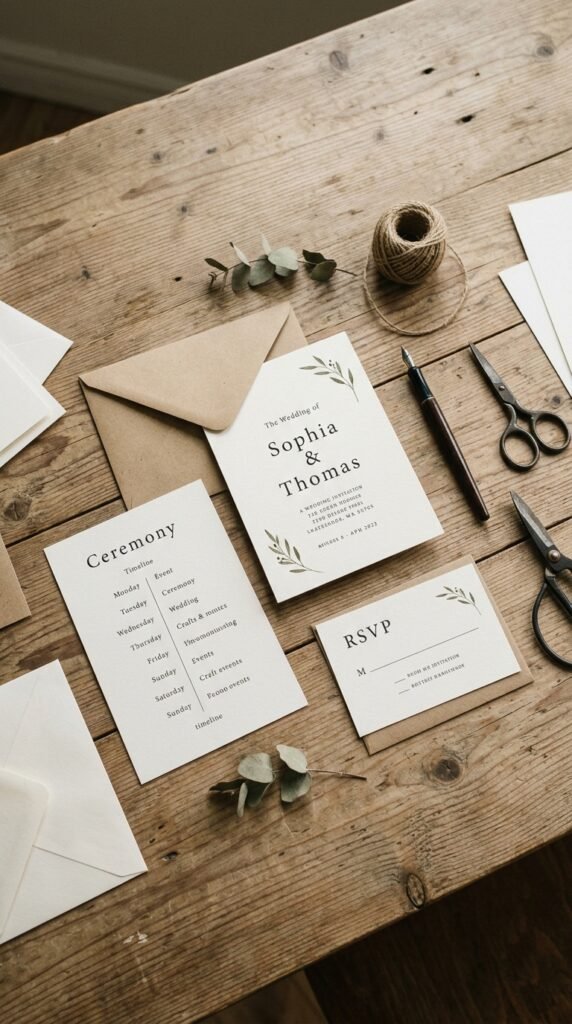
Invitations, menus, and programs add up quickly when ordered through a wedding stationer, but templates from design tools, printed at home or through an affordable online print shop, can achieve a similar look for a fraction of the cost. A clean, simple design often reads as more elegant than an overly ornate one anyway.
If DIY printing feels overwhelming, focus the splurge on the invitation itself, since that’s the piece guests keep and remember, and handle day-of paper goods like menus and programs more simply, since they’re often discarded or left on the table by the end of the night.
String Lights Instead of Elaborate Lighting Installations
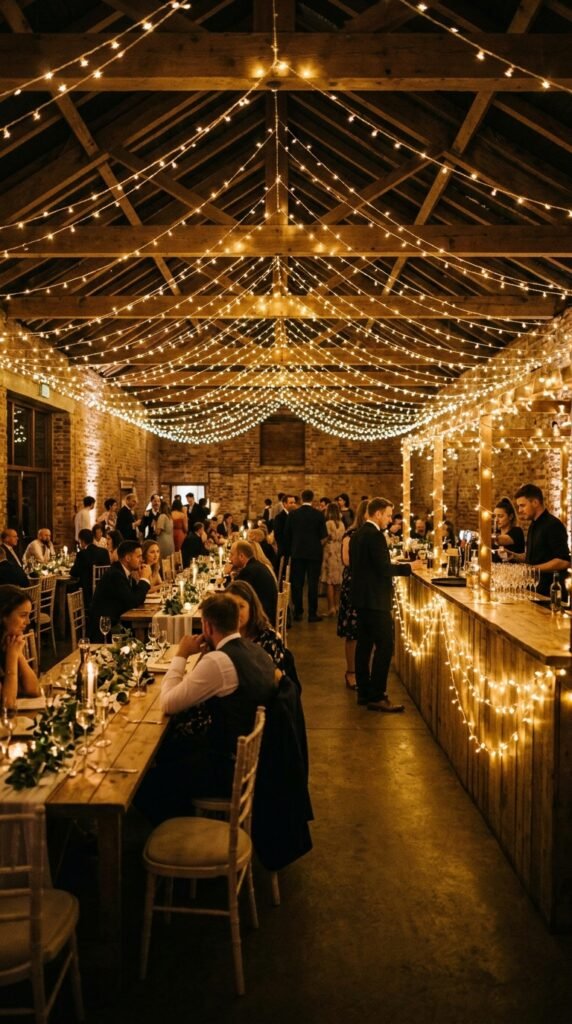
Warm white string lights are inexpensive, widely available, and instantly make a plain room feel more intentional. Draped along a ceiling, wrapped around a bar, or strung between trees for an outdoor reception, they add ambiance without the cost of a professional lighting package.
Buy more strands than you think you’ll need, since thin coverage tends to look sparse rather than magical, and the difference in cost between a few strands and enough to fill a space properly is usually still modest. Battery-operated or plug-in options both work depending on your venue’s outlets, so check availability before buying a specific type.
A Single Statement Backdrop Instead of Decor Throughout the Room
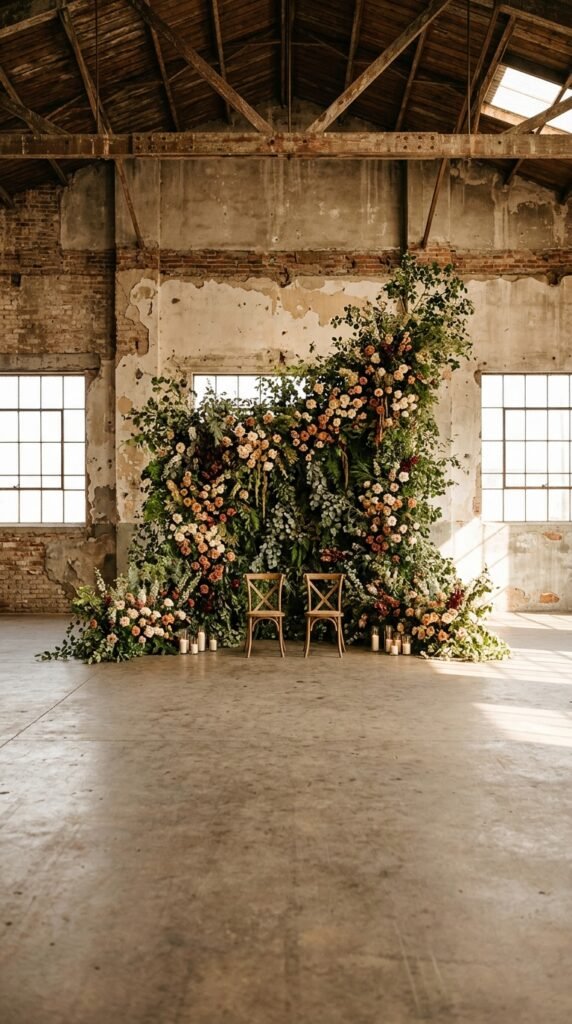
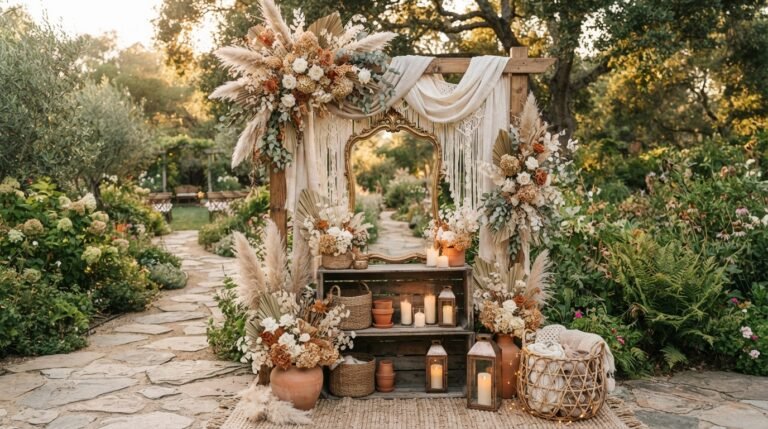
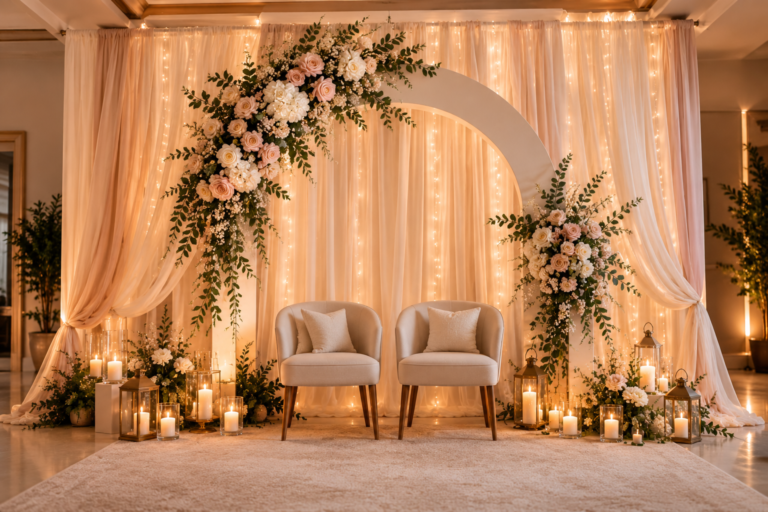
Rather than spreading a limited budget evenly across the entire venue, concentrating the bulk of your decor budget on one area, a ceremony backdrop, the head table, or a photo spot, creates a strong visual moment that shows up in most of your photos, while the rest of the room can stay simple.
This approach works because guests and cameras naturally gravitate toward a few focal points during a wedding, so an evenly thin budget often reads as less impressive than one concentrated area done well. A single floral installation, fabric drape, or greenery wall can do the job of decorating an entire room’s worth of photos for a fraction of what decorating every surface would cost.
Repurpose Ceremony Decor for the Reception
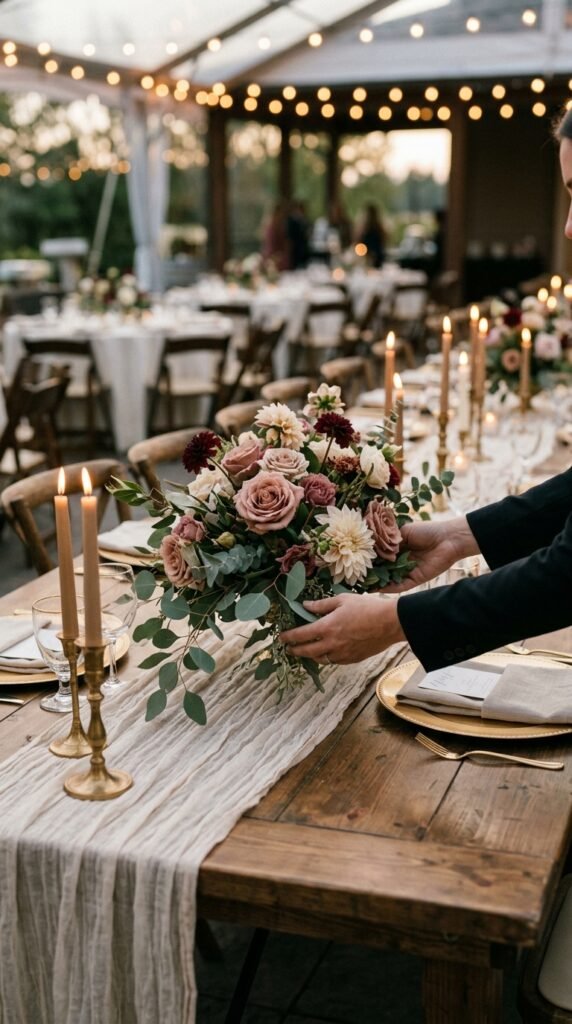
Flowers, arch pieces, and aisle decorations used for the ceremony can often be moved and reused at the reception, around the entrance, on the cake table, or as part of the head table setup, rather than sitting unused for the rest of the night. This effectively doubles the value of anything purchased for the ceremony.
Plan this with your florist or day-of coordinator in advance, since someone needs to physically move the pieces during the gap between ceremony and reception, and it works best with a point person assigned to the task rather than leaving it to chance. Confirm the timeline allows enough time for the move without rushing the setup.
Secondhand or Vintage Items Mixed Into the Decor
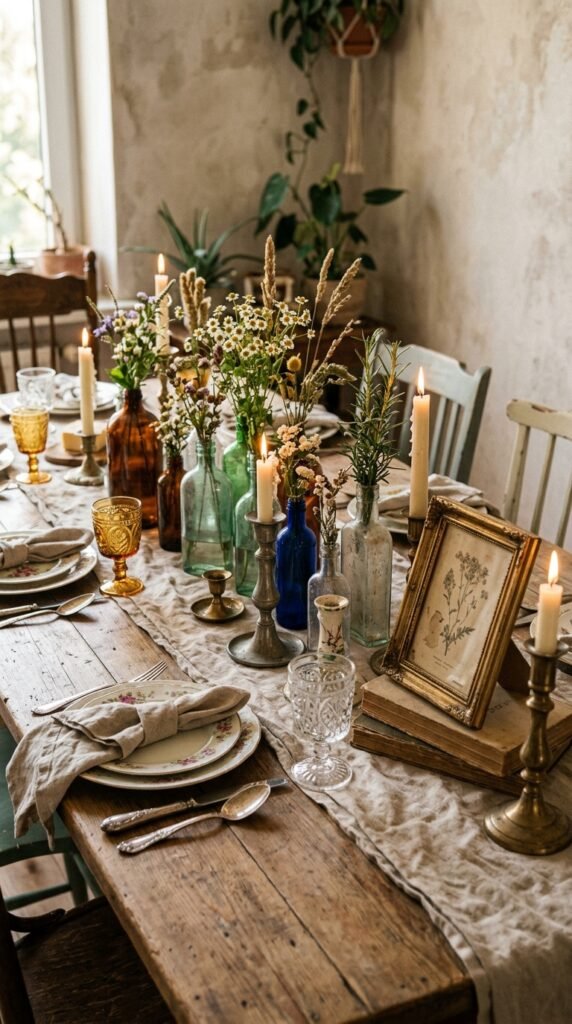
Vintage glass bottles, mismatched candle holders, old books, or thrifted frames add character and texture to a tablescape at a much lower cost than buying matching new items, and the mismatched quality often looks more interesting in photos than a uniform set anyway.
Thrift stores, estate sales, and antique shops are worth browsing months in advance, since finding enough matching or complementary pieces takes time, and good finds don’t always show up on short notice. This approach pairs particularly well with a vintage or rustic wedding style, where imperfection is part of the appeal rather than something to avoid.
Simple, Cohesive Color Palette Over a Scattered One
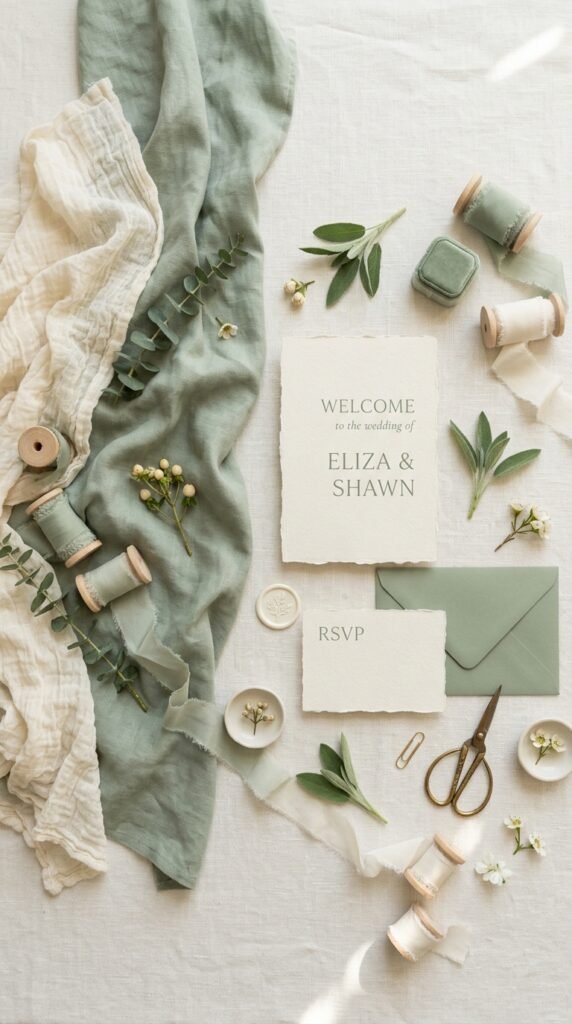
Choosing two or three colors and sticking to them across every decor element, linens, flowers, signage, favors, makes a budget wedding look considerably more put-together than one with a wider, less disciplined color story. Cohesion reads as intentional even when individual pieces are inexpensive.
This costs nothing extra and is really a planning decision rather than a purchase, but it has an outsized effect on how polished the overall wedding looks in photos. Write your palette down early and refer back to it before every decor purchase, since it’s easy to drift from the plan once you start browsing for individual items.
Signage Made From Affordable Materials
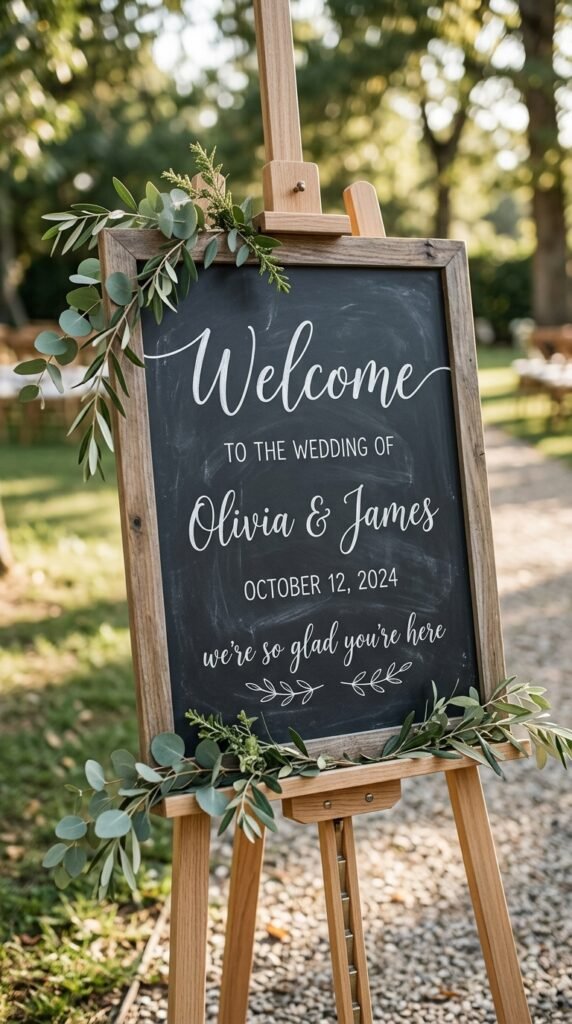
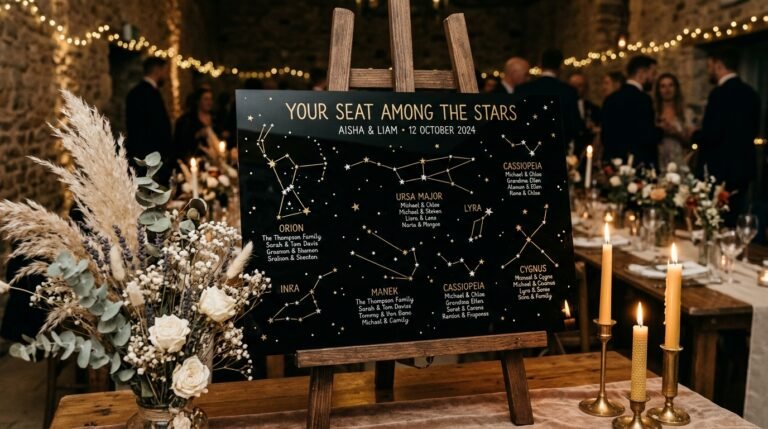
A chalkboard sign, a simple wood board with painted lettering, or even a printed sign in a thrifted frame communicates the same information as an elaborate custom sign, a seating chart, a welcome message, a bar menu, at a much lower cost. Handwriting or simple stenciling can look just as intentional as professional calligraphy with some practice.
If handwriting isn’t a strength, ask around before paying a professional calligrapher, since friends or family members with decent handwriting are often willing to help for free or for a small favor in return. A clean, legible font in a simple style tends to look better than an attempt at elaborate script that doesn’t quite come together.
Natural Venue Features Instead of Added Decor
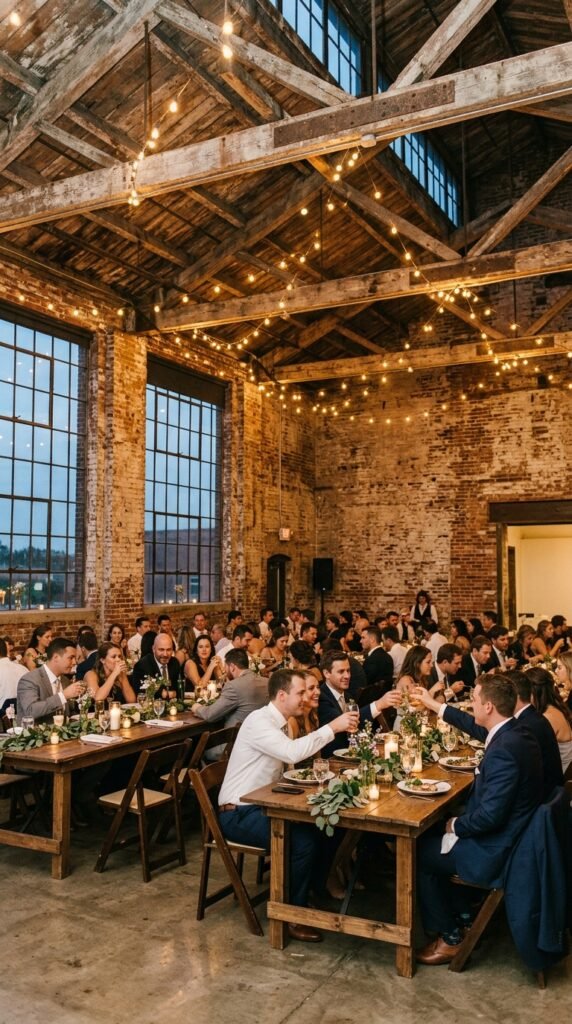
A venue with existing character, exposed brick, a scenic view, string lights already installed, mature trees, or interesting architecture, needs far less added decor to look complete than a blank, neutral space. Choosing a venue with built-in charm is itself a decor decision, even though it’s made earlier in the planning process than most people realize.
Walk through your venue and take note of what it already offers before planning any additional decor, since spending money to cover up or compete with existing features is a common and avoidable expense. Sometimes the most cost-effective decor decision is simply not adding anything to a space that already does a lot of the work on its own.
Making a Low Budget Look Intentional
The wedding decor that looks expensive rarely is, because the actual difference between a polished reception and a cluttered one usually comes down to restraint and cohesion rather than total spending. Pick your few splurges carefully, candlelight, one statement moment, a cohesive palette, and let everything else stay simple and consistent.
If you’re deciding where to spend what little budget you have, prioritize lighting and one strong focal point over decorating every table and surface evenly. A room with good light and one memorable detail will photograph and feel far more special than one that spread a small budget too thin trying to decorate everything at once.